
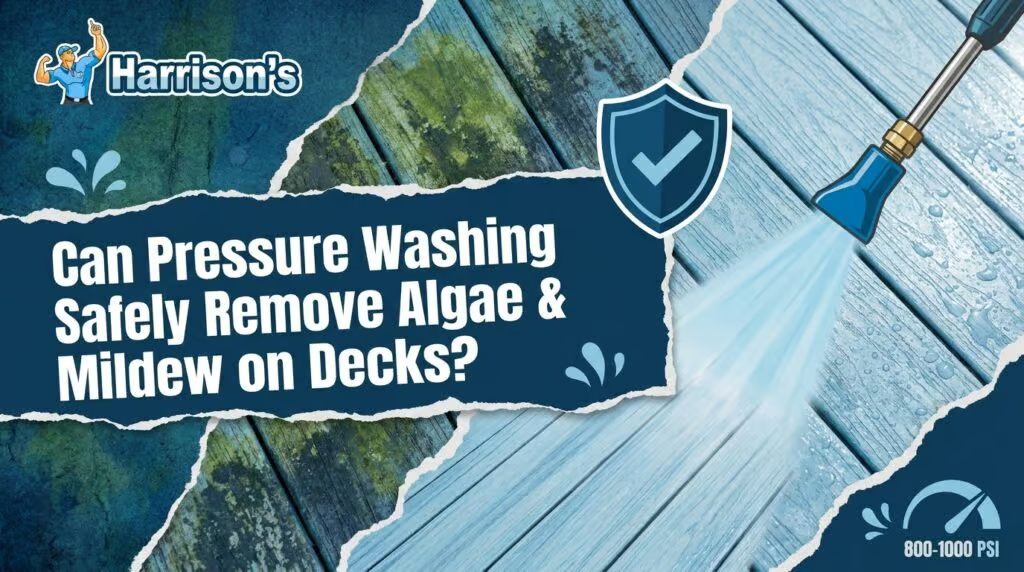
Pressure washing can remove algae and mildew from composite decking, but only when the pressure stays low and the technique matches the manufacturer’s guidance. Composite boards are softer than many people expect, and excessive pressure can etch the surface, leaving permanent dull patches that trap future staining. The question Can pressure washing safely remove algae and mildew from composite decking? has a clear answer: yes, if you treat the growth first, use a wide fan nozzle, and keep the pressure between 800 and 1,000 psi.
We check every composite deck’s warranty terms before starting, because some manufacturers restrict pressure washing entirely or require specific settings. This article explains the mechanics, risks, and safe settings so you can make an informed decision without damaging the deck.
How Pressure Washing Mechanically Removes Algae and Mildew
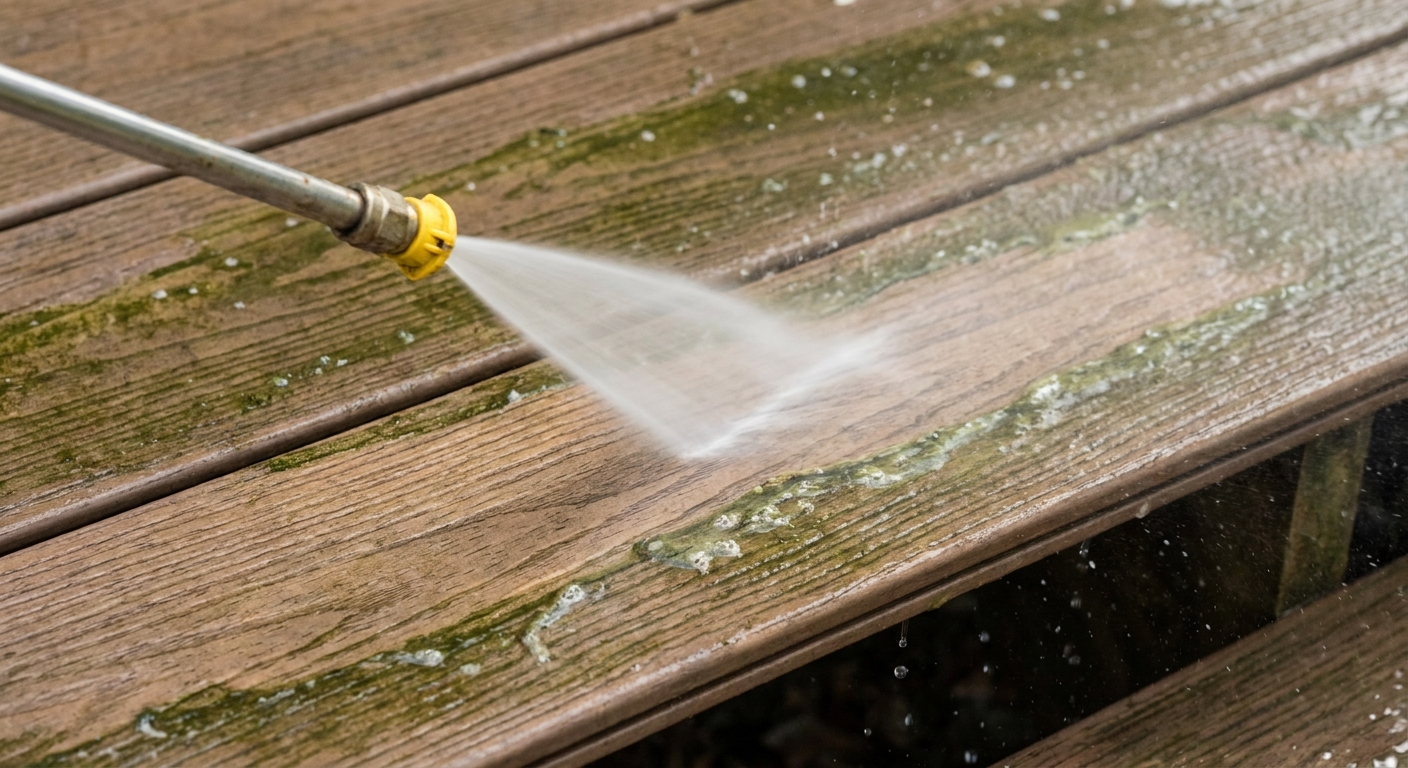
Algae and mildew grip the textured surface of composite decking through microscopic root-like structures. A controlled stream of high-pressure water breaks that physical bond, lifting the organisms out of the board’s grain and flushing them away. Because the water reaches into grooves and embossed patterns, it removes growth that a simple hose rinse would leave behind.
The high-pressure water physically dislodges algae and mildew from the deck surface
When the water strikes at the correct angle and distance, it shears the biomass off the surface without relying on scrubbing. The key is to keep the wand moving so no single spot receives prolonged force. Even at low pressure, a wide fan covers the board evenly and works the algae loose from the edges where it tends to accumulate.
Provides thorough cleaning without harsh scrubbing
Unlike a stiff brush that can scratch composite caps, a correctly set pressure washer rinses the entire board surface uniformly. This reduces the risk of leaving uneven wear marks or polishing the surface. We typically follow the pressure rinse with a low-volume rinse to remove any loosened particles from the gaps between boards.
Potential Risks of Pressure Washing Composite Decking
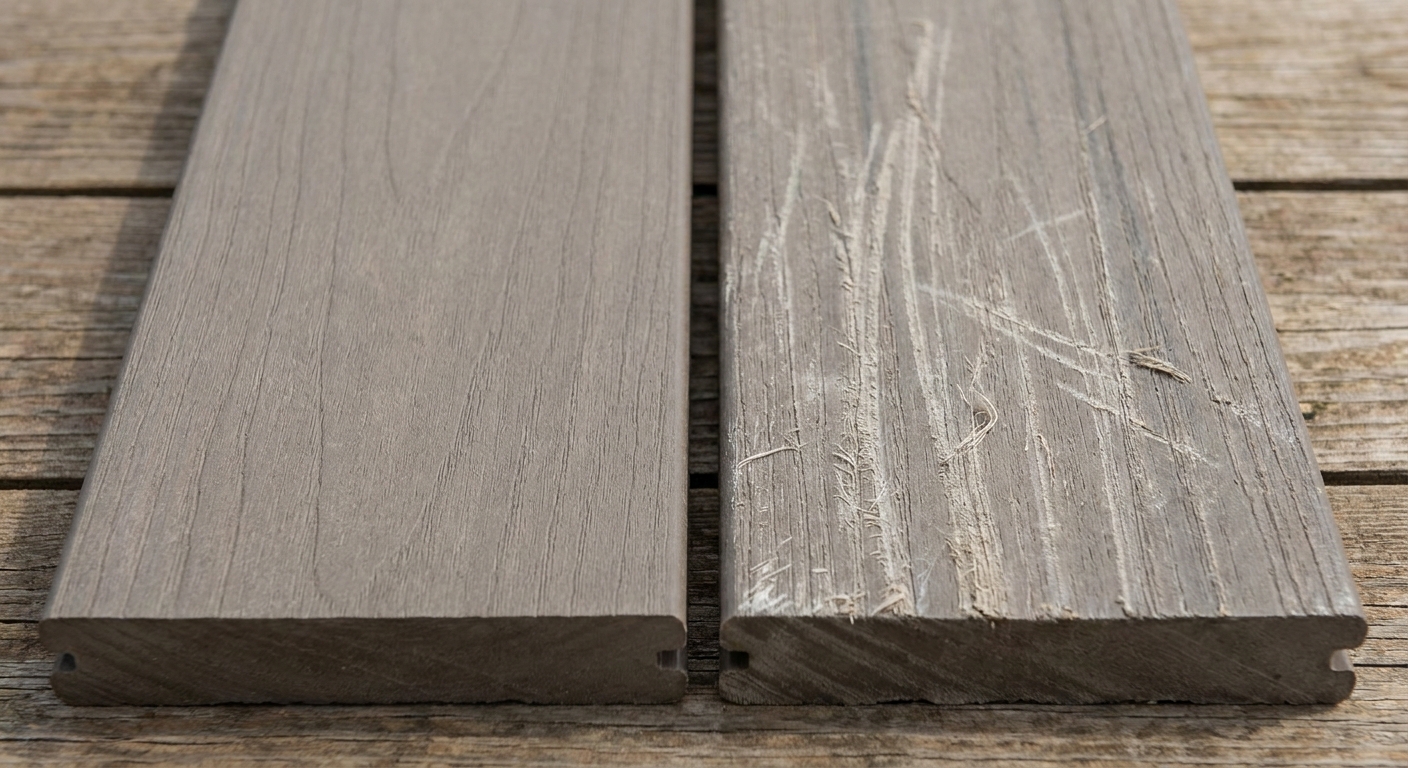
Composite decking is durable, but it is not indestructible. The plastic and wood-fiber blend can be etched by an overly concentrated spray, and once the protective surface is damaged, moisture and stains penetrate more easily.
Etching and surface damage can occur if pressure is too high
Consumer Reports notes that composite decking tends to resist deep staining but can be etched if pressure is excessive. A zero-degree nozzle or holding the wand too close can cut grooves into the board, creating a rough texture that collects dirt and algae faster than before. We always start with the widest nozzle and lowest pressure that still lifts the growth.
Pressure washing may void manufacturer warranty, so check terms first
Many composite decking manufacturers publish specific cleaning guidelines, and some state that pressure washing above a certain psi will void the surface warranty. Before any cleaning, we locate the warranty document or the manufacturer’s online care guide. If the terms are unclear, we default to a soft wash method rather than risk the warranty.
Recommended Pressure and Nozzle Settings for Safe Cleaning
The safest range for composite decking is between 800 and 1,000 psi, according to Consumer Reports’ testing guidance. This is much lower than the pressure used on concrete or brick, and it is enough to remove algae and mildew when paired with pre-treatment and a wide fan nozzle.
Use low pressure between 800–1000 psi to avoid damage
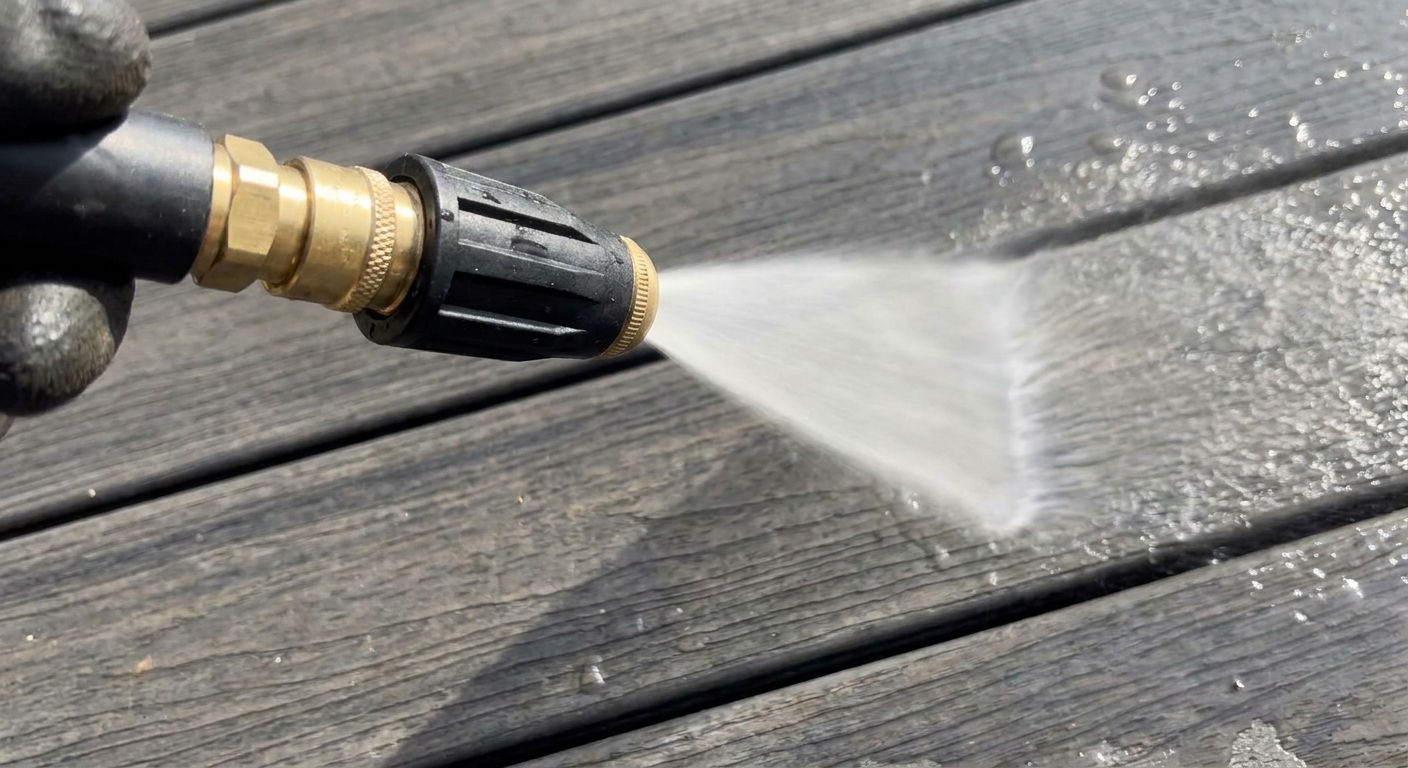
Set the machine to the lowest effective pressure and test it on an inconspicuous corner or offcut first. Hold the wand at least 12 inches from the surface and keep the spray moving with the grain of the boards. If the algae does not lift immediately, do not increase pressure; instead, apply a pre-treatment cleaner and let it dwell before rinsing again.
Choose a wide fan nozzle (e.g., 25°) for gentle yet effective cleaning
A 25-degree nozzle creates a broad sheet of water that spreads the force across a larger area. This reduces the pounds per square inch felt by any single point on the composite. Avoid turbo nozzles and zero-degree tips, which concentrate the water into a narrow, damaging stream.
Enhancing Removal with Pre-Treatment Cleaners
Pressure alone often removes visible algae, but it may leave behind spores or roots embedded in the surface texture. A pre-treatment with a mildewcide or algaecide kills the organisms and loosens their grip, making the rinse more effective and slowing regrowth.
Apply a mildewcide or algaecide before pressure washing
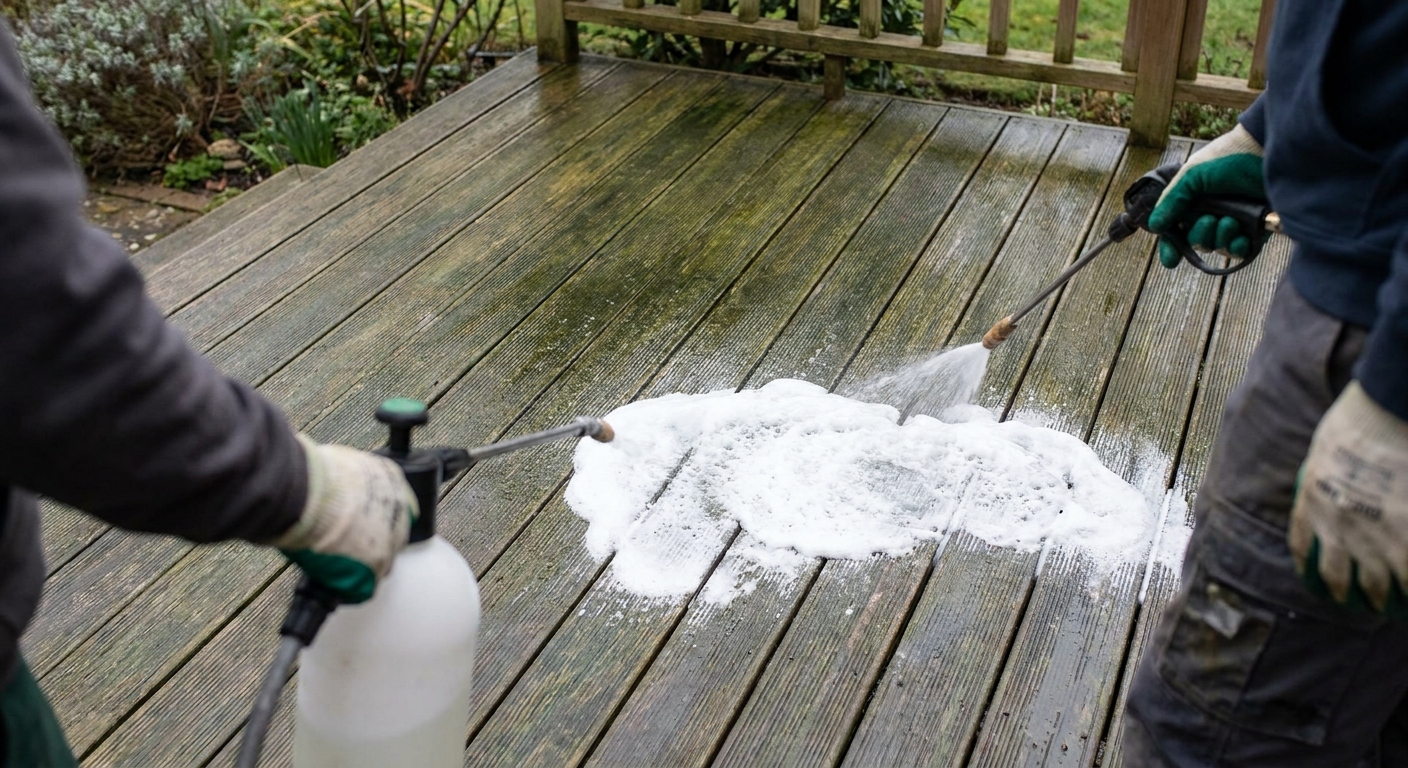
Spray the cleaner onto the dry deck and allow it to dwell for the time recommended on the label, usually 5 to 10 minutes. This gives the active ingredient time to penetrate the algae cells and break down the biofilm. We then rinse with the pressure washer set to low pressure, working from one end to the other so dirty water does not sit on clean boards.
Pre-treatment kills organisms and loosens them, improving results and reducing regrowth
Because the cleaner kills the algae rather than just blasting it off, the deck stays cleaner longer. This is especially helpful in shaded areas where regrowth is common. A quality pre-treatment also reduces the need for repeated high-pressure passes, which lowers the cumulative stress on the composite surface.
Alternative Cleaning Methods for Stubborn Algae and Mildew
When a deck shows heavy buildup or the manufacturer prohibits pressure washing, lower-impact methods can still produce excellent results. These approaches take slightly longer but eliminate the risk of etching or warranty issues.
Gentle scrubbing with a brush and garden hose for light growth
For light algae or mildew, a soft-bristle brush attached to a telescoping pole can work a mild cleaning solution into the surface. A garden hose with a spray nozzle then rinses the loosened debris away. We use this method on capped composite boards that have a thinner protective shell or on decks with known surface scratches.
Soft washing as a lower-pressure alternative to avoid damage
Soft washing uses a pump sprayer or specialized low-pressure equipment to apply a cleaning solution, then rinses with a gentle stream of water. The pressure is often under 500 psi, which is safe for even the most delicate composite finishes. This technique is particularly effective when the growth is widespread but the board surface is already showing signs of wear.
Preventing Future Algae and Mildew Growth on Composite Decking
Algae and mildew need moisture, shade, and organic debris to thrive. Removing those conditions reduces how often the deck needs deep cleaning and extends the life of the surface.
Address shade and moisture issues to reduce growth conditions
Trim overhanging branches so sunlight can reach the deck for at least part of the day. Ensure downspouts direct water away from the deck perimeter, and check that the deck has proper gaps between boards so moisture can drain and dry. Even small improvements in airflow and light make a noticeable difference.
Regular cleaning and debris removal to keep the deck dry and clean
Sweep or blow leaves, pine needles, and dirt off the deck every couple of weeks, especially in fall. Debris traps moisture against the surface and feeds algae growth. A quick rinse with a garden hose after heavy debris accumulation prevents organic material from breaking down into a slippery film.
Final Verdict: Can Pressure Washing Safely Remove Algae and Mildew from Composite Decking?
Yes, pressure washing can safely remove algae and mildew from composite decking when it is done at 800–1000 psi with a 25-degree nozzle and a pre-treatment cleaner. The risks of etching or warranty voiding are real, but they are avoidable with the right technique. We always start with the gentlest effective method and increase pressure only if the manufacturer’s guidelines clearly allow it. If you are unsure which setting your deck can handle, ask a professional to assess the surface and recommend a cleaning plan that protects both the boards and the warranty.