
The short answer is yes: do self-cleaning windows still need professional cleaning? Absolutely—but not because the technology fails. Self-cleaning glass handles everyday organic grime well, yet it cannot remove every type of deposit, and in many conditions its self-cleaning cycle never completes. Understanding what the coating does and does not do is the key to keeping your windows truly clear.
A titanium dioxide layer uses sunlight to break down organic dirt, and a hydrophilic surface helps rain sheet it away. But when rain is sparse, pollution is heavy, or mineral-rich water dries on the glass, the coating cannot keep up. In those cases, professional cleaning becomes necessary, not optional.
How Self-Cleaning Windows Work
Self-cleaning glass is not a film that repels dirt; it is a surface that actively breaks down organic material. A microscopically thin coating of titanium dioxide—typically 15 to 25 nanometres thick—is fused to the exterior surface during manufacturing.
When ultraviolet light strikes the coating, it triggers photocatalysis. This generates hydroxyl radicals that attack the carbon bonds in organic dirt such as pollen, tree sap, and exhaust film, decomposing them into carbon dioxide and water. The process takes time, often 12 to 48 hours depending on UV intensity.
The second step is hydrophilic sheeting. Normal glass is hydrophobic, so water beads up and leaves streaks. The titanium dioxide coating makes the surface hydrophilic, so water spreads into a thin, even sheet. That sheet picks up the loosened dirt and carries it off the glass, reducing water spots and streaks.
- Photocatalysis breaks down organic deposits.
- Hydrophilic sheeting rinses the residue away evenly.
- Both steps require sunlight and water to work.
Limitations of Self-Cleaning Glass
Self-cleaning glass is a supplement to maintenance, not a replacement for all cleaning. Its effectiveness depends heavily on the type of dirt, the weather, and the surrounding environment.
Types of Dirt Not Broken Down
Photocatalysis only decomposes organic compounds. Inorganic deposits such as sand, cement dust, salt crystals, and mineral scale from hard water are unaffected by the coating. These particles remain on the surface until physically removed. Even organic matter that is too thick or fresh—like a heavy bird dropping—may not fully break down before it hardens.
Dependence on Weather
Self-cleaning glass needs both ultraviolet light and water to complete its cycle. In long dry spells, the decomposed organic particles have no rain to rinse them away, so they accumulate as a dusty film. In heavily shaded or north-facing elevations, the photocatalytic reaction slows down, leaving dirt in place for weeks. Even when rain arrives, a light mist may not produce enough sheeting action to carry heavy deposits off the surface.
Environmental Factors
Urban exhaust film, industrial fallout, and airborne oils can overwhelm the coating between rains. Coastal environments bring salt spray that crystallizes on the glass; because salt is inorganic, the coating cannot break it down. Nearby construction produces fine silica dust that bonds with moisture and leaves a stubborn haze. Each of these factors reduces the visible clarity that self-cleaning glass promises.
Do Self-Cleaning Windows Still Need Professional Cleaning? Scenarios That Require It
Some contaminants defeat self-cleaning glass completely. In these situations, professional cleaning is the only way to restore a clear view without damaging the coating.
Hard Water Stains
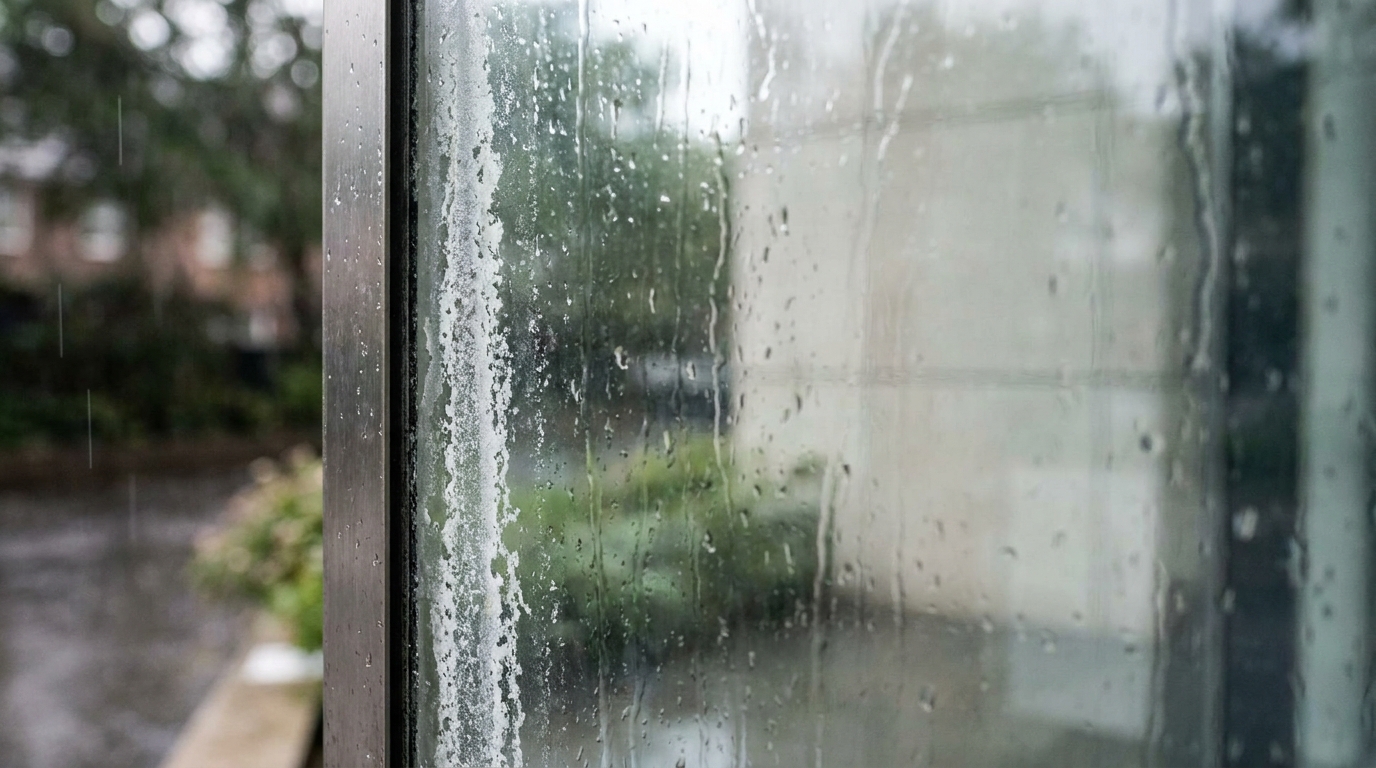
When irrigation water, sprinkler overspray, or rain with high mineral content dries on self-cleaning glass, it leaves calcium and magnesium deposits. Because these minerals are inorganic, the photocatalytic coating cannot dissolve them. Over time, the deposits build into a white haze that ordinary rainwater will not rinse away. Professional cleaners use pure water or mineral-dissolving solutions specifically safe for the coating to lift these stains.
Bird Droppings and Organic Matter
Fresh bird droppings are organic, but they are often too thick and sticky for the photocatalytic process to handle in one cycle. The top layer may decompose, but the lower layer hardens and bonds to the glass. Tree sap, insect residue, and pollen clumps can behave the same way. Left long enough, these organic deposits etch into the surface, requiring mechanical removal with coating-safe tools.
Paint and Adhesive Residue
Paint overspray, caulk, tape residue, and adhesive films are not organic and will never be broken down by sunlight. These materials must be removed carefully, because aggressive scraping or abrasive pads can scratch the thin titanium dioxide layer. Professional window cleaners identify the residue type and use the correct solvent or soft-edged tool to dissolve it without harming the coating.
Interior Glass
Self-cleaning coatings are applied only to the exterior surface of the glass. The interior pane is standard glass, so it accumulates cooking grease, fingerprints, dust, and off-gassing film exactly as any other window does. No amount of rain or sun will clean the inside of a self-cleaning window. Interior cleaning remains a separate task that professionals handle with streaking-free methods.
Coating Damage
The photocatalytic layer is durable but not indestructible. Harsh chemicals, abrasive scrubbers, razor blades, or strong alkaline cleaners can permanently strip or scratch the coating. Once damaged, the glass loses its self-cleaning properties and behaves like standard glass. Professionals can assess whether a dull appearance is caused by coating degradation or by heavy contamination, and they can clean accordingly without causing more harm.
Maintaining Self-Cleaning Windows Without Damage
Proper maintenance preserves the coating and extends the time between deep cleanings. It also prevents the buildup that eventually forces a more aggressive cleaning.
Preserving the Photocatalytic Coating
The coating is only about 20 nanometres thick, so it must never be touched with abrasive pads, scrapers, or harsh chemical cleaners. Acidic or ammonia-based products can etch into the layer and permanently reduce its effectiveness. Maintenance should use only neutral-pH, coating-safe solutions and soft cloths or pure water systems. Even a simple rinse with pure water after heavy dust or salt exposure can prevent inorganic buildup from bonding.
Recognizing When Professional Help Is Needed
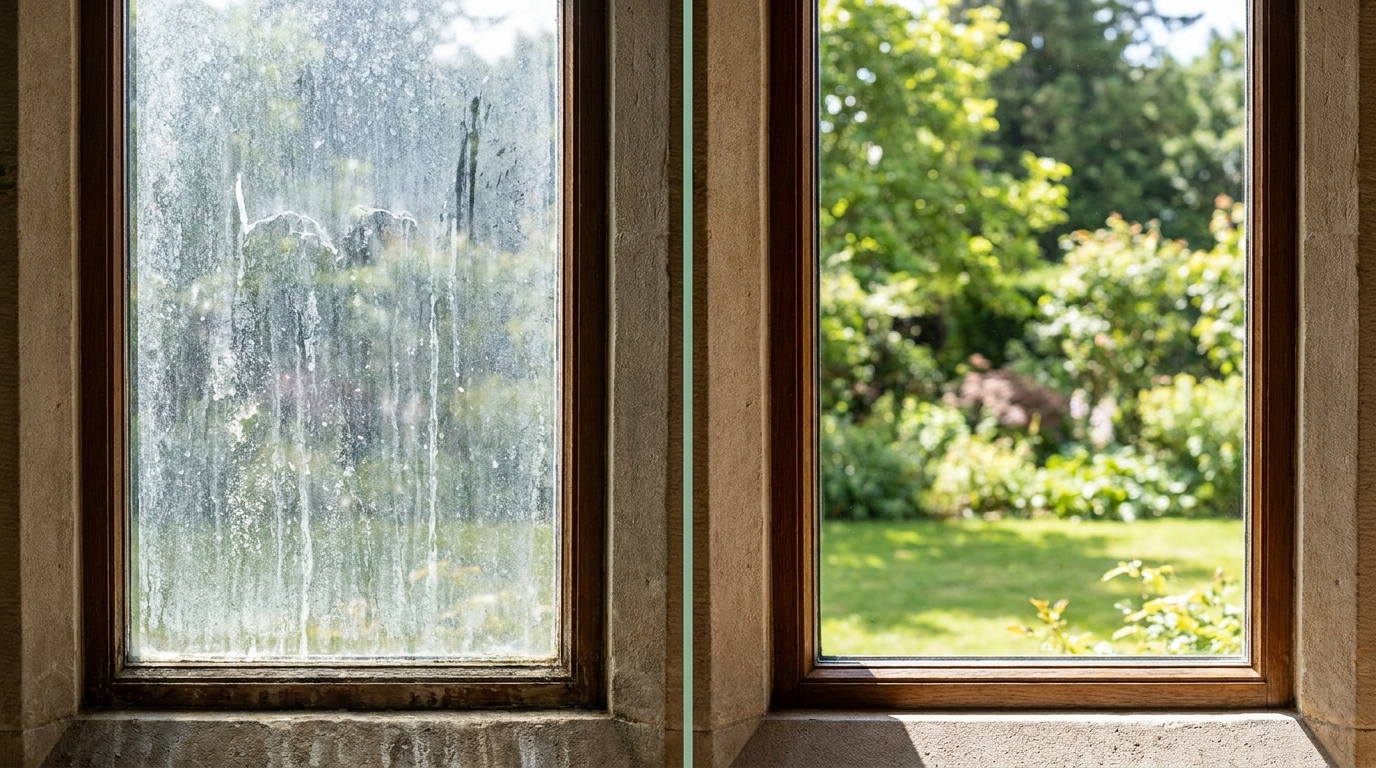
If the glass develops a persistent white haze, visible mineral spots, or a rough texture that rain does not clear, the self-cleaning cycle is no longer enough. Another warning sign is streaking after rainfall, which indicates that the hydrophilic surface has been covered by inorganic deposits. In these cases, calling a professional prevents the need for harsh cleaning later and protects the coating from permanent damage.
When Self-Cleaning Falls Short in Different Climates
Climate plays a larger role than many homeowners expect. The same self-cleaning glass can perform very differently depending on rainfall patterns, air quality, and proximity to salt water.
Dry Climates and Dust Accumulation
In areas with long periods without rain, dust, pollen, and decomposed organic particles settle on the glass and remain there. Without rain to trigger the sheeting action, the coating has no way to rinse itself. Even a few months of dry weather can leave a heavy film that requires manual rinsing or professional cleaning to restore clarity.
High Pollution Areas
Heavy traffic, industrial emissions, and urban grime deposit a mix of organic and inorganic particles on glass. The organic portion may break down, but the inorganic soot and metallic particles remain. These particles attract moisture and form a sticky film that rain cannot fully wash away. In such environments, self-cleaning glass may need professional attention more often than traditional glass because the coating can become saturated with residue.
Coastal Environments with Salt Spray
Salt spray from the ocean is one of the most stubborn contaminants for self-cleaning glass. Salt crystals are inorganic, so photocatalysis has no effect on them. The hydrophilic surface may spread the salt into a thin film, but as the water evaporates, the salt re-crystallizes into a white crust. Regular professional cleaning with pure water is the only reliable way to remove salt deposits without damaging the coating.

What Professional Window Cleaners Offer
We see the limits of self-cleaning glass every day when we clean exterior surfaces across residential and commercial buildings. Our team has cleaned more than 50,000 windows, and the evidence is clear: the coating handles some dirt, but mineral, salt, and interior deposits still need professional methods.
Deep Cleaning Techniques
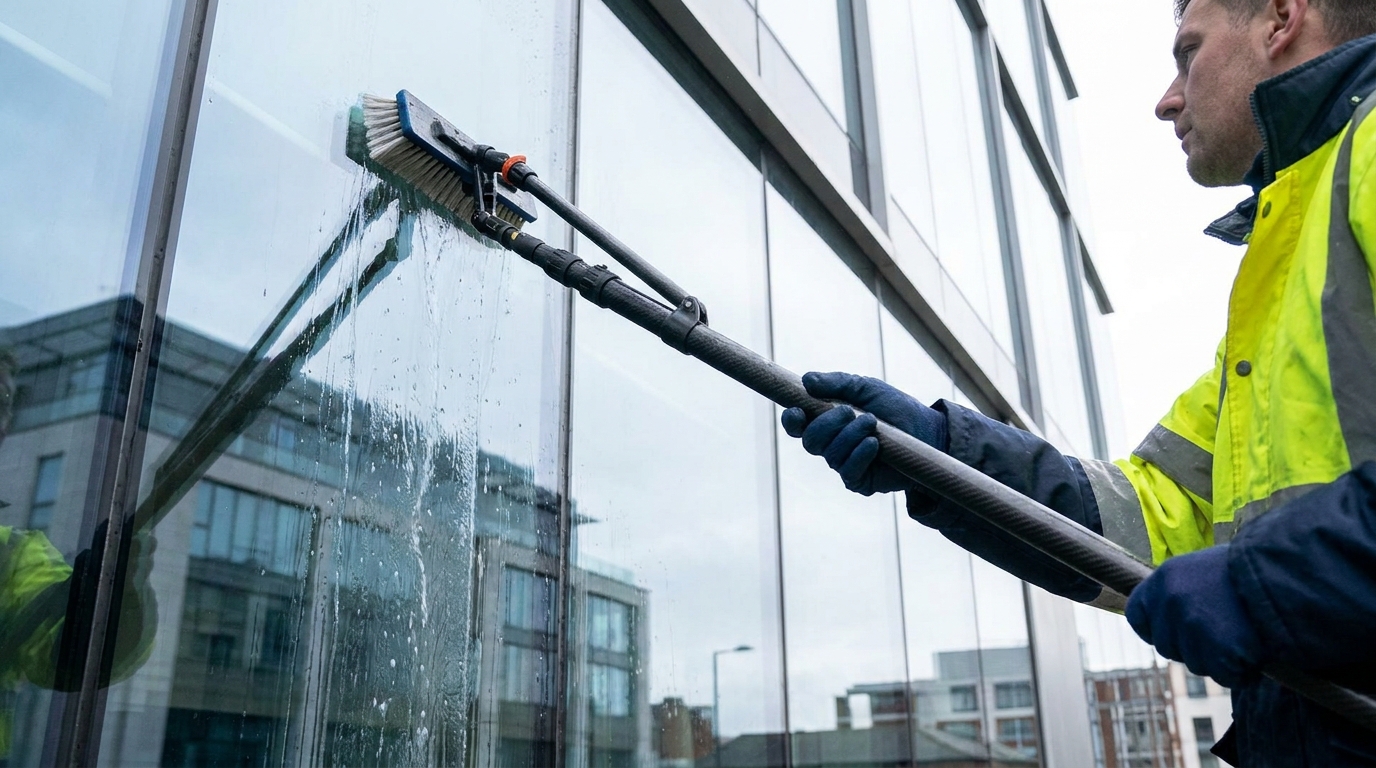
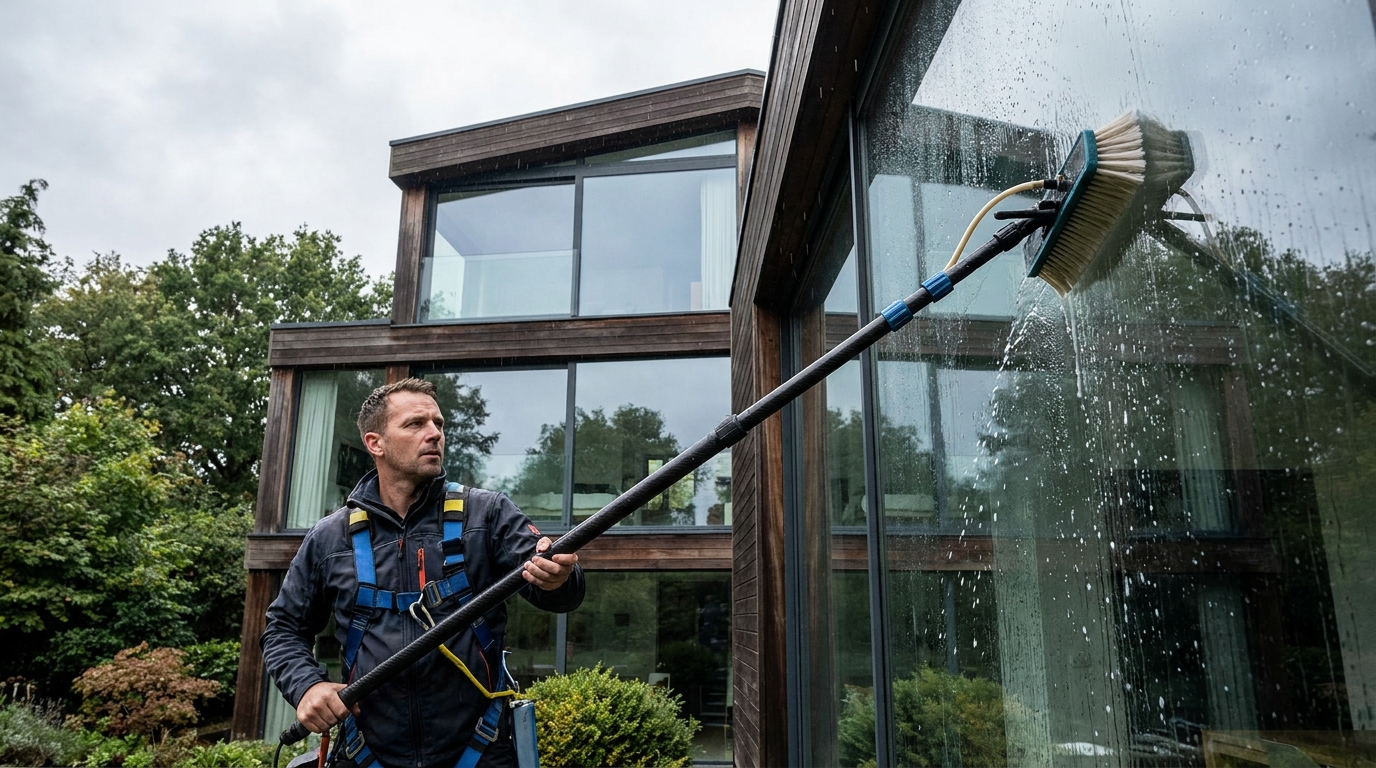
Professional window cleaners use water-fed pole systems with pure water, soft brushes, and gentle agitation to reach high or awkward windows without leaning ladders against frames. For self-cleaning glass, they avoid anything that could scratch the coating, such as razor blades or abrasive pads. Deep cleaning removes the inorganic deposits that photocatalysis cannot touch, restoring the hydrophilic sheeting action so rain can work again.
Coating-Safe Products
The right cleaning products for self-cleaning glass are neutral-pH and free of ammonia or harsh solvents. Professional cleaners often use pure water because it leaves no mineral residue and does not react with the titanium dioxide layer. When more aggressive cleaning is required for paint or adhesive, professionals use targeted solvents that dissolve the contaminant without affecting the glass coating. This balanced approach protects the self-cleaning function for years.
Addressing Stubborn Contaminants
Hard water scale, salt crust, and paint overspray require different removal strategies. Professionals identify the contaminant first, then choose the least aggressive method that will work. In some cases, a soft-bristle brush with pure water is enough; in other cases, a mineral-dissolving agent may be needed. The goal is always to remove the deposit without wearing down the photocatalytic layer.
Conclusion: Do Self-Cleaning Windows Still Need Professional Cleaning?
Self-cleaning windows reduce the frequency of cleaning, but they do not eliminate the need for professional care. The photocatalytic coating is excellent at breaking down organic films, yet it cannot handle mineral deposits, salt, paint, interior grime, or climate-driven buildup. Rain and sun are necessary partners, and when either is in short supply, the glass quickly loses its clarity.
For most homes and commercial buildings, the practical approach is to treat self-cleaning glass as low-maintenance, not no-maintenance. A professional cleaning once or twice a year—or more often in harsh environments—keeps the coating performing at its best and protects your investment. If your self-cleaning windows have developed a haze, spots, or salt film, contact us to restore them safely.