
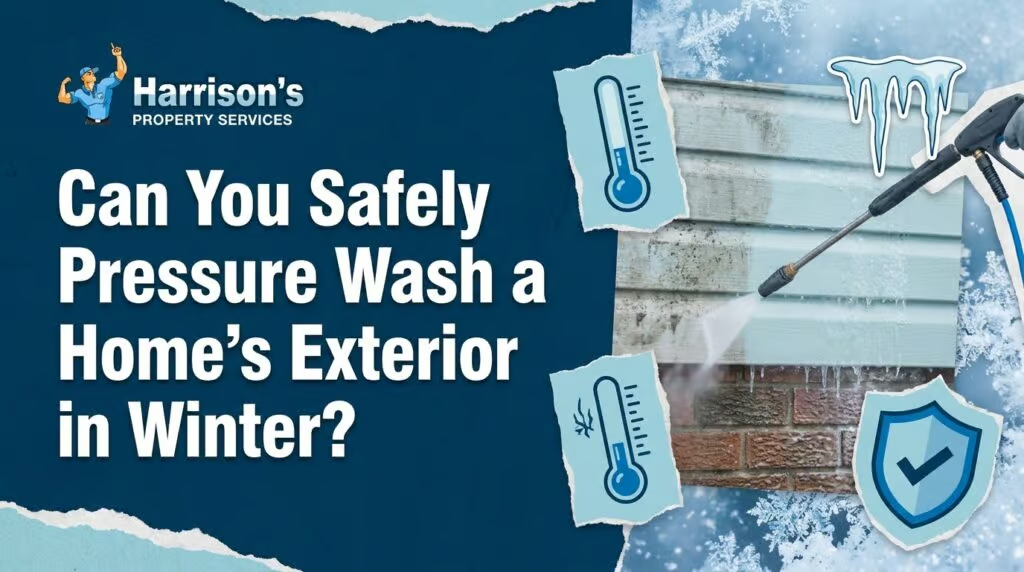
Many homeowners assume pressure washing is a warm-weather task, but exterior grime, mold, and algae do not take the winter off. The real question is not whether you can physically run a pressure washer in cold weather, but whether you can do it safely without damaging your siding, walkways, or landscaping. We approach every winter cleaning request by evaluating temperature, surface condition, and ice risk before turning on any equipment.
Can you safely pressure wash a home’s exterior during the winter months? The short answer is yes—under specific conditions and with significant adjustments to technique and preparation. Below, we explain the thresholds we respect, the preparation steps that protect your property, and why soft washing is often the smarter alternative when temperatures hover near freezing.
Assessing Winter Weather Conditions and Risks: Can You Safely Pressure Wash a Home’s Exterior During the Winter Months?
Understanding Temperature Thresholds and Freezing Concerns
We do not pressure wash when the air temperature is at or below 4°C (39°F) or when the forecast shows a drop below freezing within 24 hours of the wash. Water that remains in cracks, joints, or porous surfaces will freeze and expand, which can crack vinyl siding, split wood, and spall concrete. Even if the daytime high is above freezing, early morning or shaded areas may still hold ice from overnight frost.
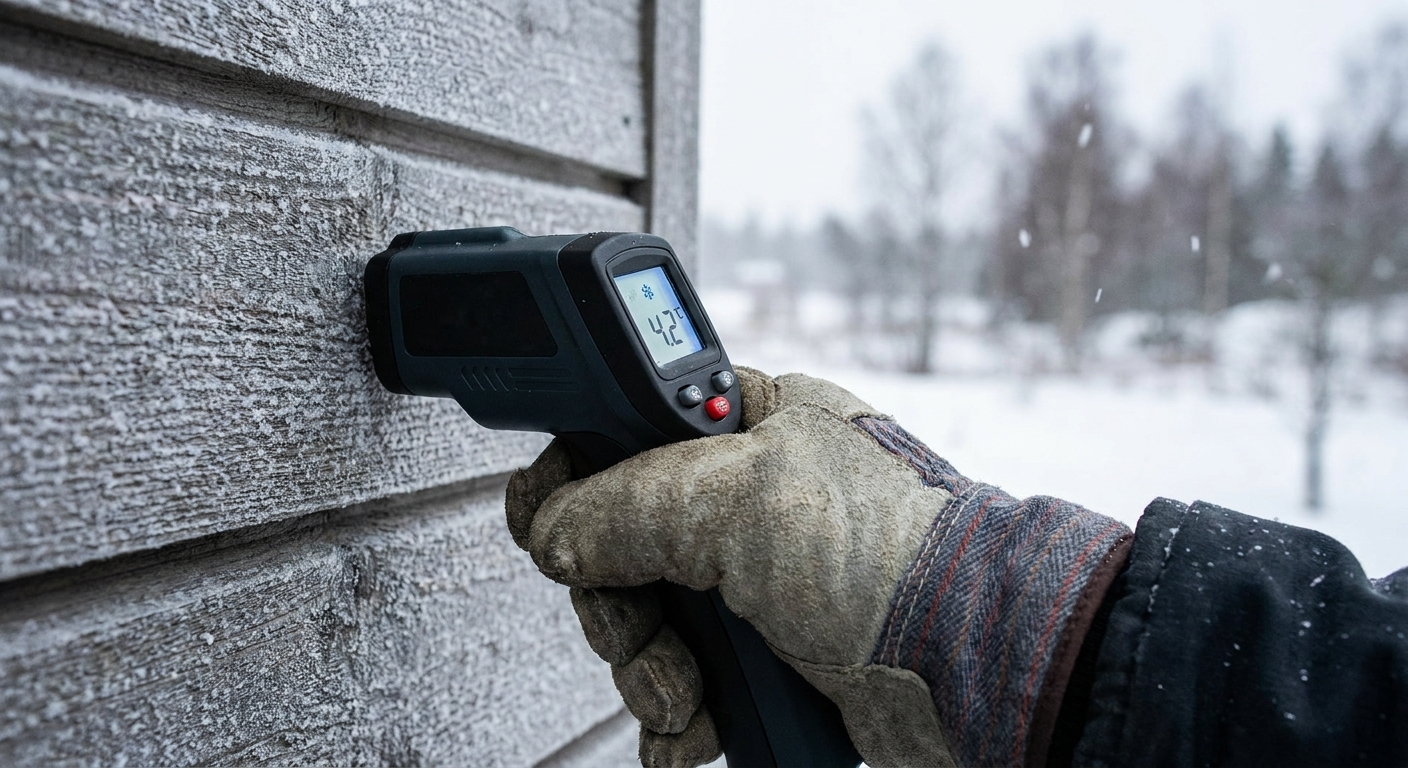
Our team checks not just the current thermometer reading but also the predicted low for the next night. We also test surface temperatures with an infrared thermometer; a sun-warmed wall may be above freezing while a shaded north wall is still below. If any area we need to clean is near the freezing mark, we postpone or switch to a no-rinse soft wash method.
Identifying Risks of Water Intrusion and Structural Damage
Cold weather makes exterior materials more brittle, but the greater risk is water getting where it should not. High-pressure spray can force water behind siding, under window trim, and into unsealed gaps around vents or electrical fixtures. Once inside a wall cavity, that water may freeze and expand, leading to hidden damage that only appears months later.
We inspect for compromised caulking, loose boards, and open mortar joints before starting. In winter, we reduce pressure and use wider fan nozzles to keep water on the surface rather than driving it inward. We also avoid spraying upward at an angle that could push water under lap siding.
Preparing Your Property for Cold-Weather Washing
Proper preparation is even more critical in winter because any overspray or runoff can quickly turn to ice. Here is what we ask homeowners to check, and what we do ourselves before bringing hoses onto the property.
Securing Windows, Doors, and Vents
- We confirm every window, door, storm window, and pet door is fully closed and latched.
- We cover or seal exterior vents, dryer exhausts, and foundation weep holes with waterproof tape or foam plugs to prevent water entry.
- We ask homeowners to turn off and cover outdoor electrical outlets and light fixtures before we arrive.
Clearing Snow and Ice from Surfaces
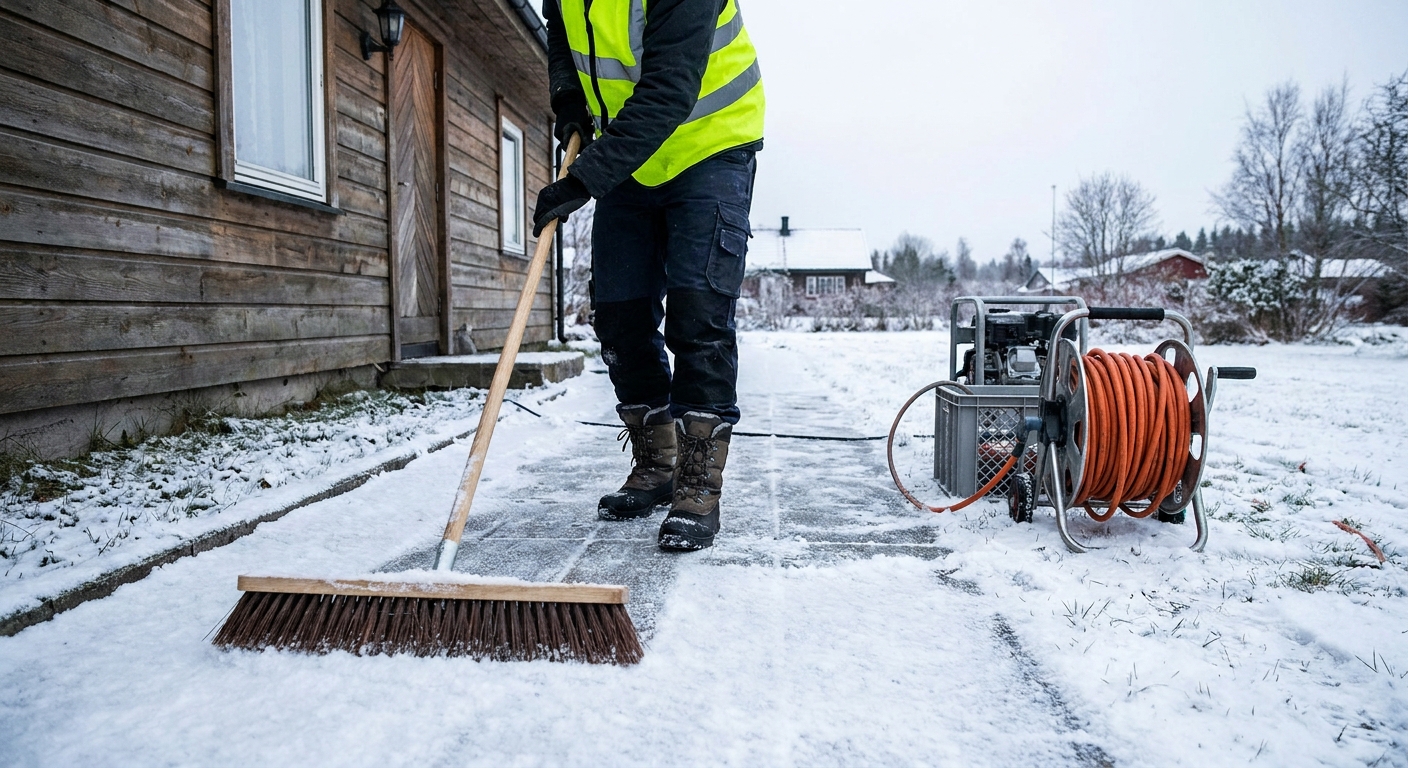
We never spray over packed snow or ice; the water would simply refreeze and create a larger hazard. Before washing, we remove loose snow with a push broom or leaf blower, and we use a plastic ice scraper on walkways. For stubborn ice on the ground, we mark the area and avoid it entirely rather than risk damaging the surface with hot water or chemicals.
Protecting Landscaping and Outdoor Items
- We ask that all patio furniture, planters, grills, and decorations be moved at least 3 metres away from the home’s exterior.
- We cover foundation plantings and shrubs with breathable fabric tarps to shield them from detergent and cold water shock.
- We clear a path from the water spigot to the work area so hoses do not drag across frozen flower beds.
Ensuring Proper Drainage to Prevent Ice Formation
Runoff is the biggest winter hazard. We check that downspouts are connected and directed away from walkways and driveways. We also inspect the slope of the ground near the foundation; if water will pool and freeze, we adjust our wash pattern or use less water. After the wash, we walk the property to break up any thin ice that formed on low-traffic areas and spread a small amount of sand or ice melt only where needed.
Choosing the Right Equipment and Techniques for Winter Conditions
Cold air changes how water behaves and how surfaces respond. We adjust our equipment accordingly.
Selecting Appropriate Pressure Washer Settings and Nozzles
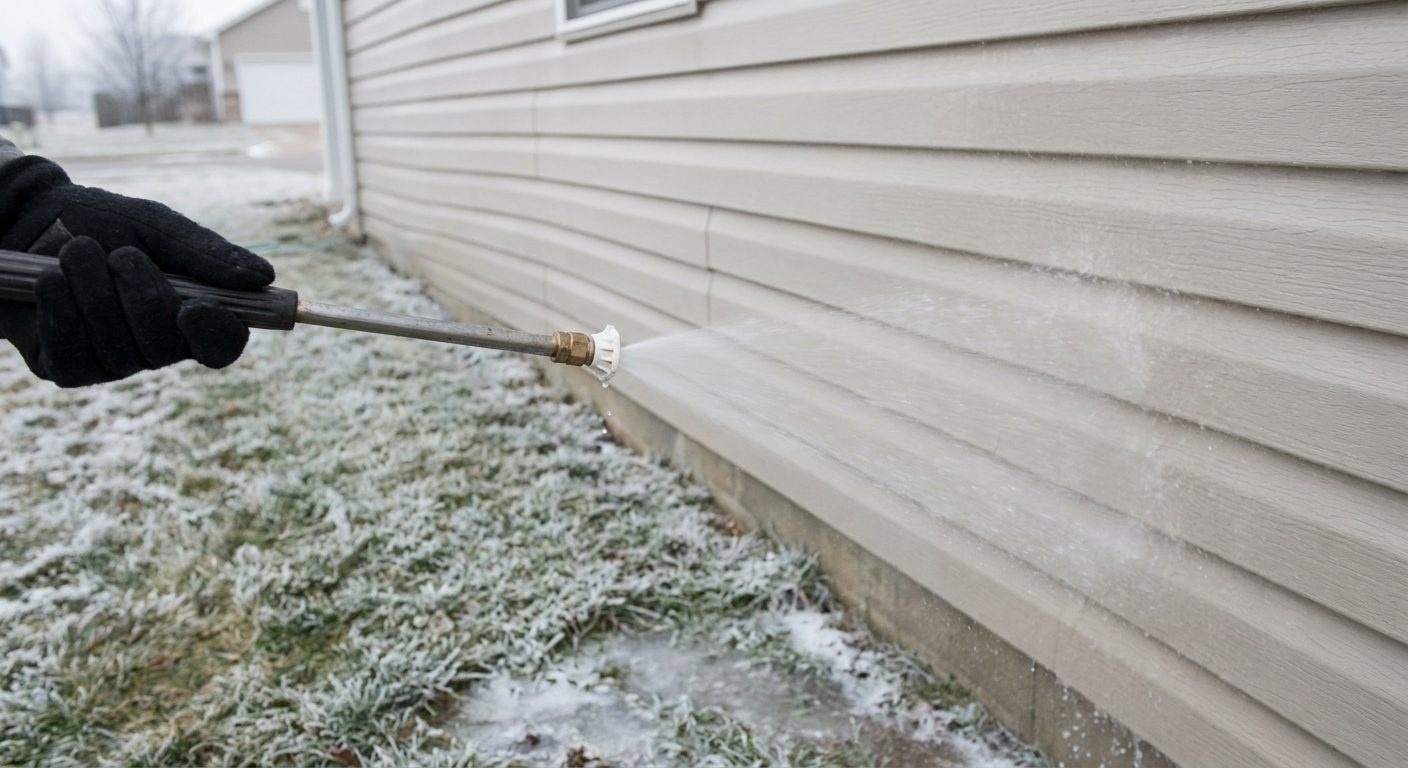
In summer, a typical house wash might use 2,000 to 3,000 PSI. In winter, we drop that to 1,000 to 1,500 PSI and switch to a 40-degree white nozzle or a low-pressure soap tip. The wider fan disperses water over a larger area, reducing impact and limiting the amount of water that can find its way into gaps.
We also use warm water when available because it helps break down grime without requiring high pressure. However, we never use hot water on frozen surfaces—the rapid temperature change can crack glass or brittle siding.
Adjusting for Material Brittleness in Cold Temperatures
- Vinyl siding becomes stiff and can crack if hit with a concentrated stream; we keep the nozzle at least 30 cm away and move in slow, overlapping passes.
- Wood siding and trim may have microscopic frost fractures; we reduce pressure further and avoid hitting end grain directly.
- Stucco and brick can spall if water saturates and then freezes; we limit water volume and allow extra drying time before nightfall.
If any surface is already damaged or has visible cracks, we do not risk pressure washing at all—we recommend a soft wash or postponing until spring.
Prioritizing Safety on Icy Surfaces
Ice is the single greatest safety risk for anyone working outside in winter. We treat every walkway, step, and ladder base as a potential slip hazard.
Preventing Slips and Falls with Proper Footwear
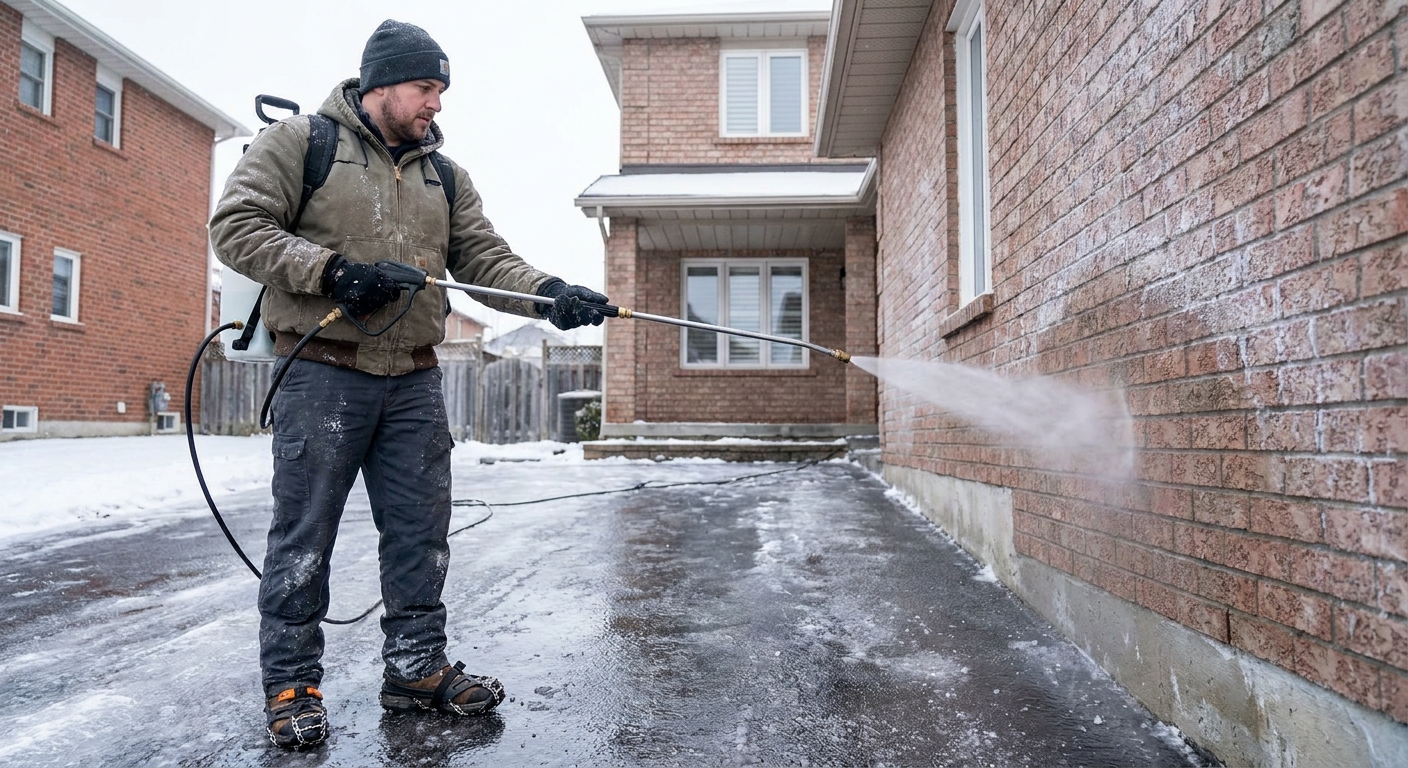
Our technicians wear insulated, waterproof boots with deep tread lugs and add slip-on ice cleats when working on any surface that may freeze. We also assign a ground spotter for every job; that person’s only role is to watch for ice patches, moving hoses, and any change in surface traction.
Avoiding Ladder Use and Alternative Access Methods
We do not use ladders when ice or frost is present. Instead, we rely on telescoping extension wands that let us clean second-storey walls and eaves from the ground. For very steep or hard-to-reach areas, we use a soft wash system with a long-reach applicator. This keeps both feet on solid ground and eliminates the risk of a ladder slipping on a frozen driveway.
With 30+ years combined experience and a 100% safety record, we approach every winter job with extra caution. That means we never put a technician on a ladder when ice is present.
Considering Gentler Alternatives: Soft Washing in Winter
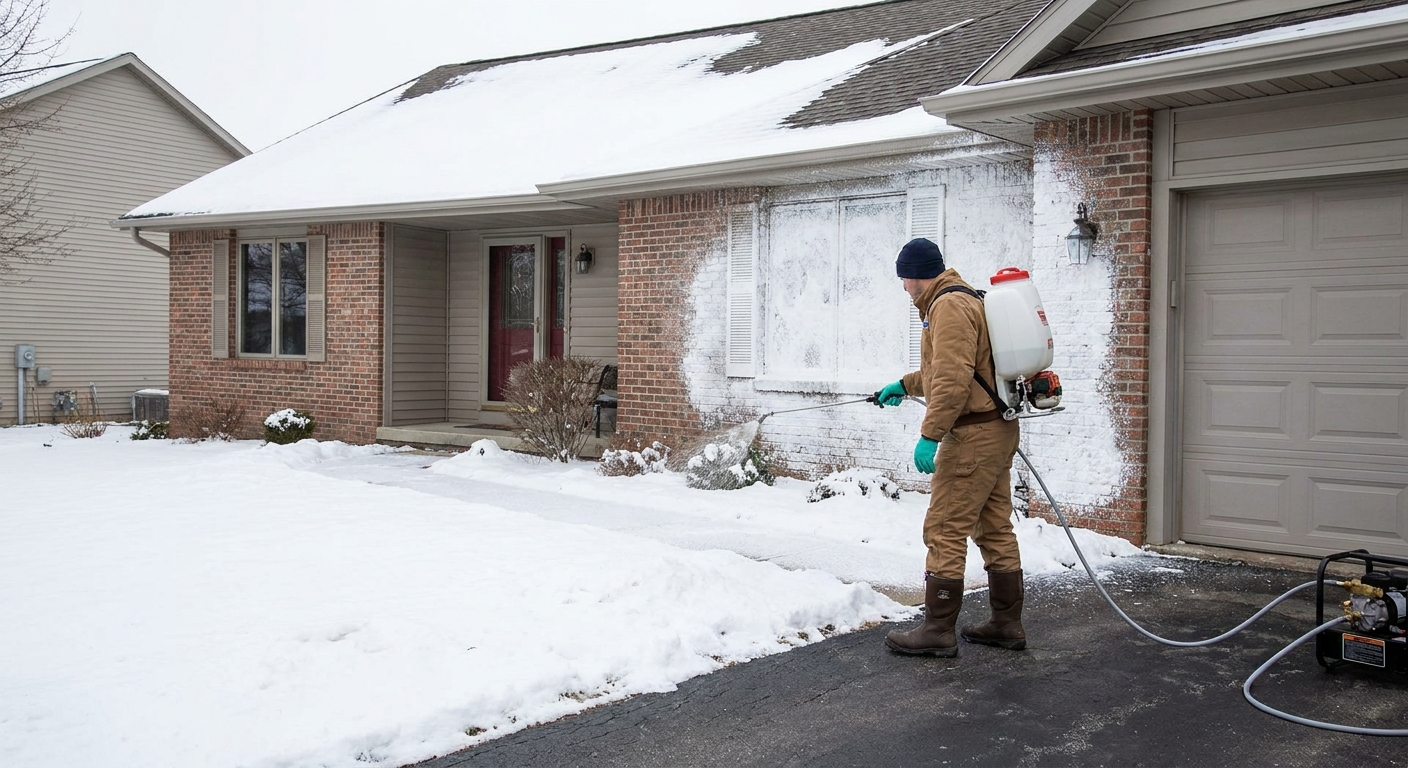
When temperatures are marginal, we often recommend soft washing instead of pressure washing. Soft washing uses much lower pressure—typically under 500 PSI—combined with specialized cleaning solutions that break down mold, mildew, and algae chemically rather than by force.
Comparing Soft Washing vs. Pressure Washing
- Pressure washing relies on high water velocity to blast away dirt; soft washing relies on detergents and dwell time.
- Pressure washing can drive water into gaps; soft washing applies solution at garden-hose pressure, greatly reducing water intrusion.
- Pressure washing produces large volumes of runoff that can freeze; soft washing uses significantly less water and allows controlled rinsing.
Benefits of Low-Pressure Cleaning in Cold Weather
Because soft washing uses less water and lower pressure, it is safer for brittle siding, older mortar, and painted surfaces. It also reduces the chance of ice forming on walkways and driveways after the job. We can apply a soft wash solution even when temperatures are a few degrees above freezing, as long as the surface will remain above freezing long enough for the solution to work and be rinsed.
For homes with heavy organic staining, soft washing often delivers better and longer-lasting results than pressure washing, especially in winter when we cannot rely on high pressure to compensate for cold water.
Special Warning: Never Pressure Wash a Roof in Winter
Pressure washing a roof is dangerous at any time of year, but in winter it becomes an extreme hazard. Roof surfaces are already slippery from frost or light snow, and a pressure washer’s spray makes them worse. A technician on a roof with a high-pressure wand is at serious risk of a fall.
Beyond the personal danger, pressure washing can dislodge shingles, strip protective granules, and force water under flashing. In freezing temperatures, that water can expand and cause leaks or structural damage. We never pressure wash a roof in winter, and we strongly advise against any roof cleaning until temperatures are consistently above 10°C (50°F) and the roof is completely dry.
Conclusion: Making an Informed Decision for Winter Exterior Cleaning
So, can you safely pressure wash a home’s exterior during the winter months? The answer is yes, but only when the temperature is above freezing, surfaces are dry, proper preparations are in place, and the pressure is turned way down. We treat winter washing as a conditional service, not a routine one.
Our advice is to watch the forecast, protect vulnerable areas, and choose the gentlest cleaning method that will get the job done. If the temperature is marginal or ice is present, waiting for a warmer day or opting for a soft wash is almost always the better choice. If you are unsure whether your home is a good candidate for winter exterior cleaning, contact us and we will assess the conditions and recommend the safest approach.