When a dark, set-in oil stain has been on your concrete driveway for months or years, a standard pressure washer alone rarely makes it disappear. The question Can professional pressure washing remove old oil stains from a concrete driveway? deserves an honest, science-based answer. In short: yes, professional pressure washing combined with the right degreasers and technique can dramatically lighten and often remove old oil stains, but complete removal is never guaranteed. The outcome depends on how deeply the oil has penetrated, the concrete’s condition, and the chemistry used.
We approach every oil stain as a two-part problem: the surface residue and the deeper hydrocarbon shadow left in the concrete’s pores. Pressure is only the final rinse; the real work happens when a degreaser breaks the bond between oil and concrete. This article explains exactly how the process works, what factors affect success, and what realistic results you can expect.
Understanding How Oil Stains Penetrate Concrete
Concrete Porosity and Capillary Action
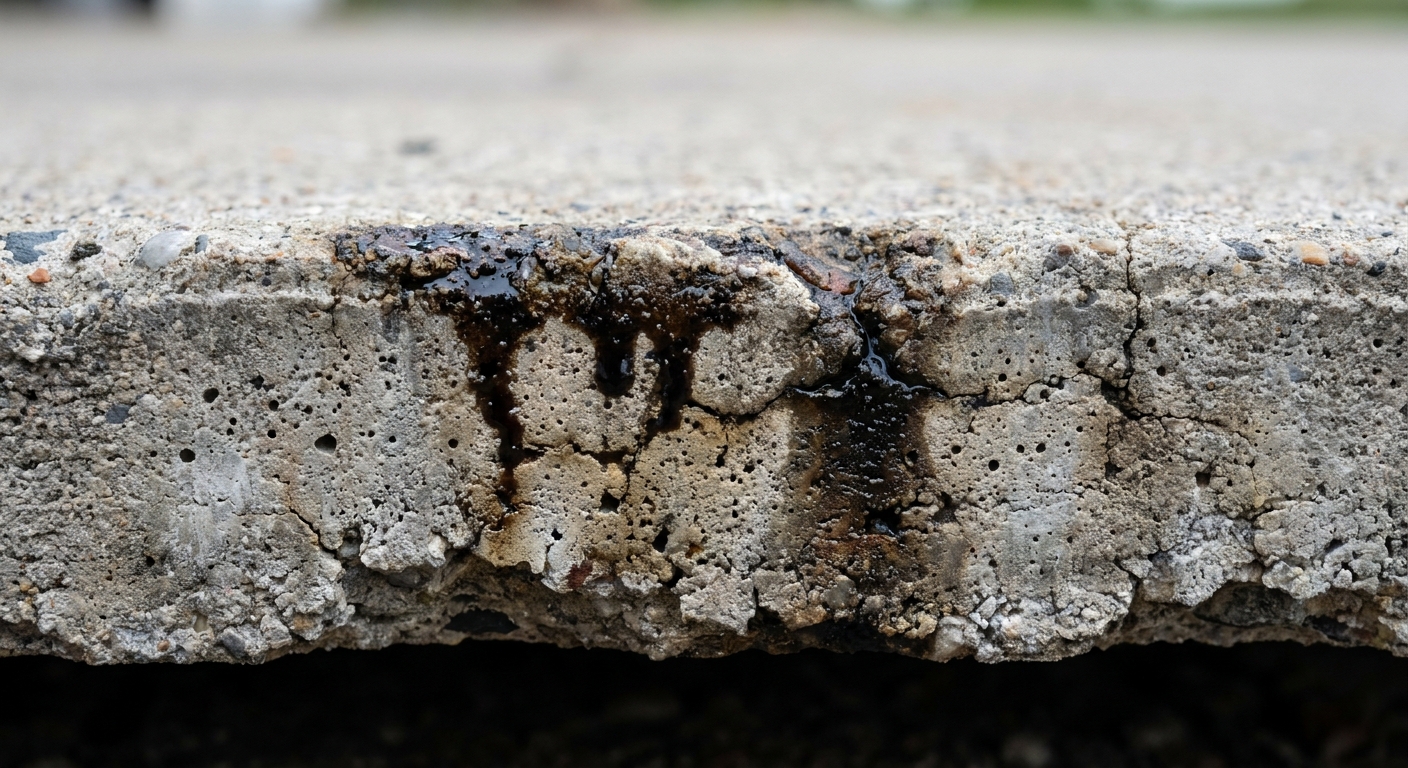
Concrete may look solid, but it is actually a rigid sponge. Under a microscope, it is filled with a network of tiny pores and capillaries. When oil lands on the surface, it does not just sit there; capillary action pulls the liquid oil down into these microscopic channels. The same force that draws water up a paper towel is at work, pulling oil deeper into the slab over time.
Chemical Bonding of Oil to Concrete
Unlike water, motor oil and grease are nonpolar hydrocarbons. Concrete, especially cement paste, has chemical sites that attract and hold these hydrocarbon molecules. Over weeks and months, the oil begins to cure and bond to the concrete matrix. This is why a simple rinse cannot dislodge it: the oil is no longer just sitting on top, it has become part of the surface chemistry.
Impact of Weathering and Time
As concrete ages, it naturally develops micro-cracks and becomes more porous, especially if it has not been sealed. Sun exposure, freeze-thaw cycles, and rain all open the surface further. An old oil stain has had years to migrate through these pathways, sometimes reaching several millimetres below the surface. The longer it sits, the more intertwined it becomes with the concrete itself.
Why Pressure Washing Alone Is Insufficient for Old Oil Stains
Oil’s Hydrophobic Properties
Oil repels water. When you blast an oil stain with high-pressure water, the water droplets simply slide off the oily film without mixing or lifting it. The stain may look lighter while the concrete is wet, but as soon as it dries, the dark shadow reappears. Water alone cannot break the chemical bond between oil and concrete.
Risk of Driving Stains Deeper
Worse, excessive pressure can actually push the oil deeper into the concrete. The force of the water drives the oil sideways and downward into adjacent pores, spreading the stain and making it harder to treat later. This is especially true with a zero-degree nozzle or holding the wand too close.
Limitations of Water Pressure
Even industrial pressure washers rated at 3,000 PSI or more are simply blasting water at a hydrophobic substance. Pressure removes loose dirt, grime, and surface-level oil, but it cannot suck oil out of the pores. That requires chemistry—specifically, an emulsifier or degreaser that can surround the oil molecules and make them water-soluble.
The Professional Approach: Combining Pressure Washing with Degreasers
Role of Degreasers
Professional-grade degreasers are formulated to break down petroleum-based stains. They contain surfactants that reduce the surface tension between oil and water, allowing the two to mix. This chemical action lifts the oil out of the concrete pores so it can be rinsed away, rather than relying on pressure alone.
Emulsification Process
Emulsification is the key step. Degreaser molecules surround each oil droplet, forming a microscopic shell that is attracted to water on the outside and oil on the inside. Once the oil is emulsified, it becomes suspended in the rinse water and can be flushed away from the surface instead of soaking back in.
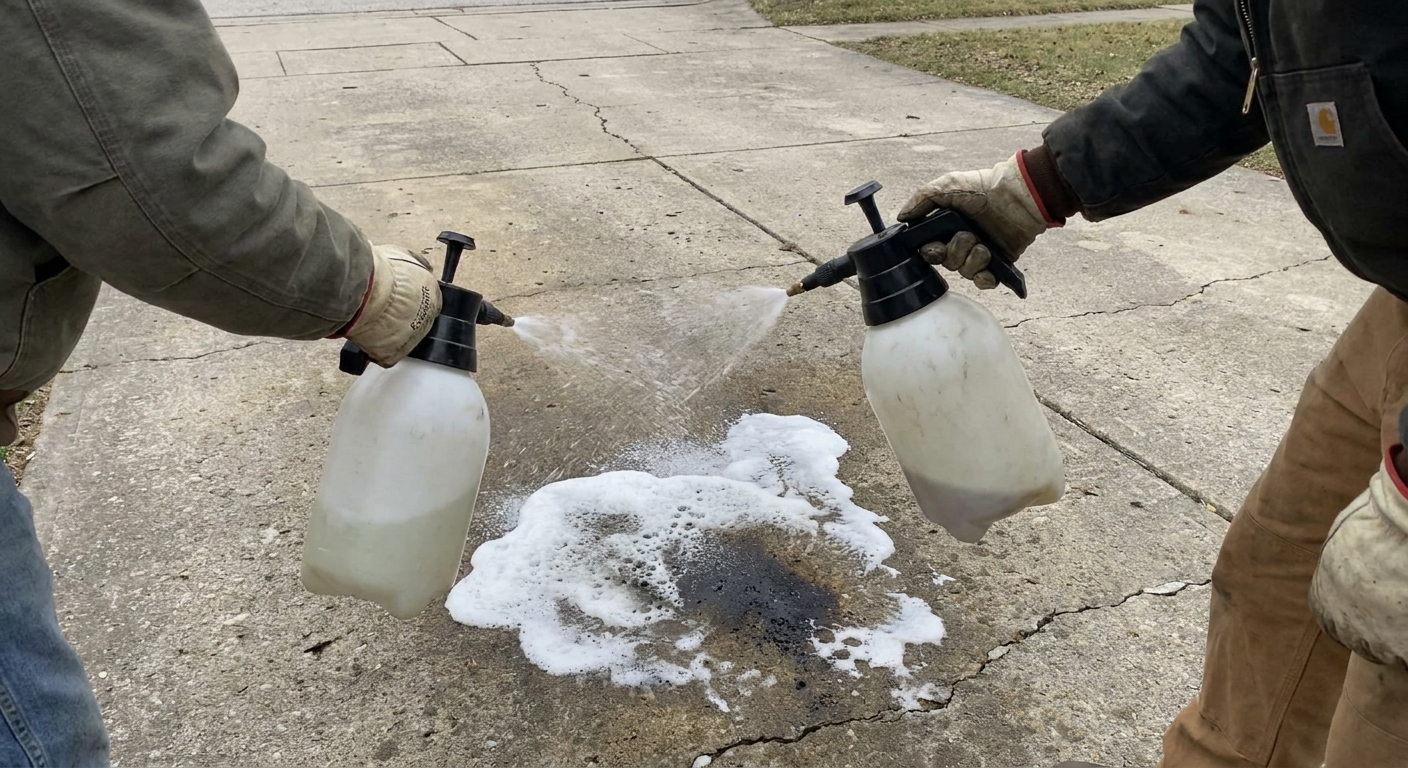
Importance of Dwell Time
Chemicals need time to work. After applying the degreaser, we let it dwell on the stain for at least 5 to 10 minutes, and sometimes longer for very old, thick stains. This allows the product to penetrate the same pores the oil used. Agitating the area with a stiff brush further works the degreaser into the surface and breaks up the upper crust of the stain.
Step-by-Step Process Used by Professionals
Inspection and Assessment
Every job starts with an evaluation of the stain’s age, size, oil type, and the concrete’s condition. We check whether the concrete is sealed, how porous it is, and whether the stain has spread. This determines which degreaser strength to use, how long to dwell, and whether hot water is necessary.
Pre-Treatment and Agitation
We apply the degreaser at the correct dilution for the stain severity, then gently work it into the surface with a stiff-bristle brush or a surface cleaner with chemical injection. This mechanical agitation helps the degreaser penetrate deeper and break up the hardened oil film. For large or multiple stains, we may pre-treat the entire area before rinsing.
Pressure Washing Technique
After the degreaser has had time to dwell, we rinse using a pressure washer with a 15- to 25-degree nozzle, keeping the wand moving in slow, overlapping passes. We use lower pressure on older or more porous concrete to avoid etching the surface. The goal is to flush away the emulsified oil, not to grind it out with force.
Post-Treatment Evaluation
Once the area is rinsed and dry, we evaluate the result. If a faint shadow remains, we may reapply the degreaser, allow another dwell period, and rinse again. In some cases, a second or third application can continue to lighten the stain, but we never keep blasting indefinitely because that risks damaging the concrete.
Equipment and Techniques: PSI, Flow Rate, and Hot Water
Optimal PSI for Concrete
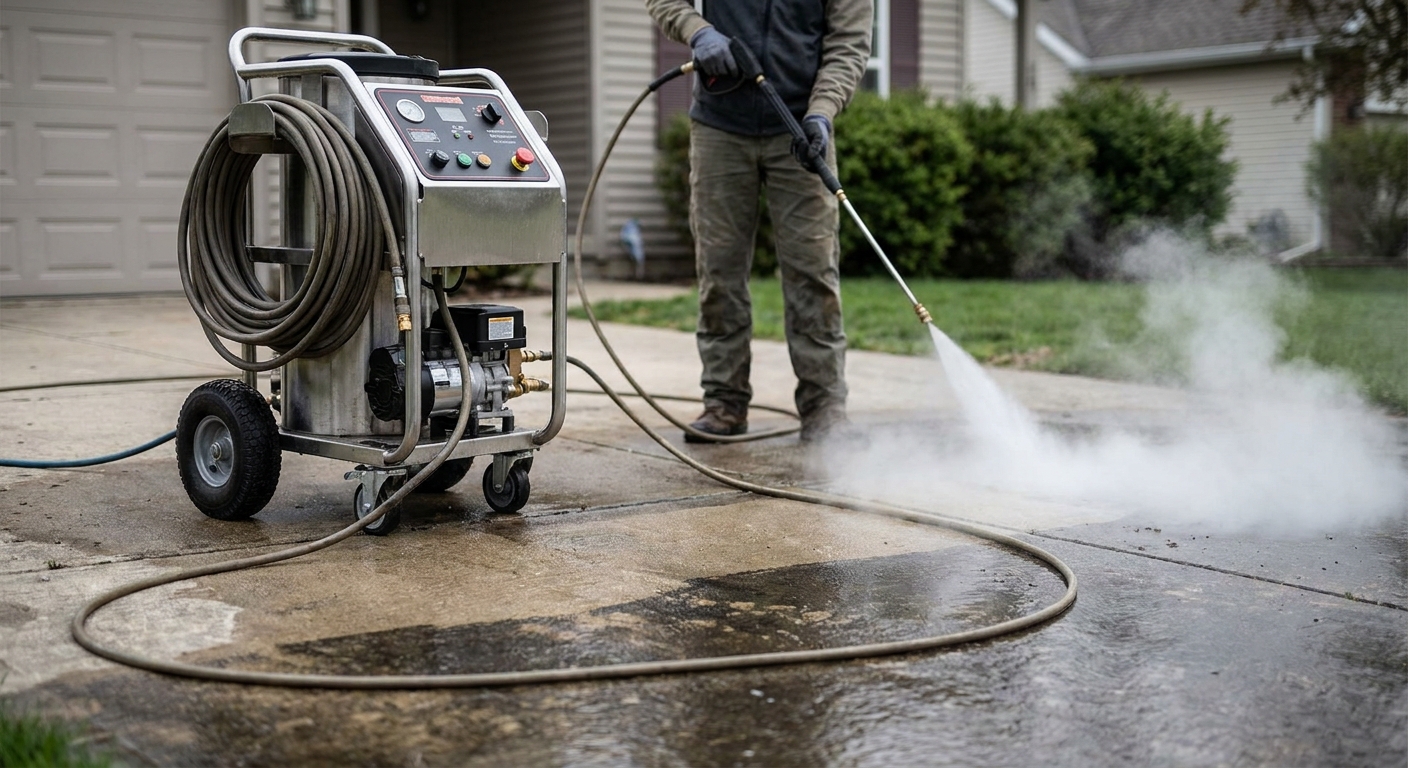
For concrete driveways, a pressure washer rated between 2,500 and 3,000 PSI is typically effective for stain removal without causing surface damage, provided the correct nozzle and distance are used. Higher PSI does not mean better oil removal; it mainly increases the risk of etching or pitting the concrete.
Flow Rate and Cleaning Efficiency
Flow rate matters as much as pressure. A machine delivering at least 2.5 gallons per minute (GPM) can carry away emulsified oil and dirt more efficiently than a low-flow unit with higher PSI. Professional units often pair moderate pressure with high flow to flush stains out of the pores rather than just pushing them around.
Hot Water vs. Cold Water
Hot water pressure washers are particularly effective on old oil stains because heat lowers the viscosity of the oil, making it easier for the degreaser to emulsify. However, many residential jobs are successfully completed with cold water and the right chemistry. The degreaser, not the temperature, is the primary cleaning agent; hot water simply speeds up the reaction.
Key Factors Influencing Oil Stain Removal Success
Stain Age and Thickness
A fresh oil spill, if treated immediately, can often be removed almost completely. But an old stain that has been baking in the sun for a year or more has penetrated deeply and bonded with the concrete. Thick, layered stains from repeated leaks are even more challenging because the outer crust protects the deeper oil.
Type of Oil
Motor oil, transmission fluid, cooking grease, and hydraulic oil each have different chemical compositions. Heavier oils and greases tend to leave more persistent stains, while lighter fluids may evaporate somewhat but still leave a dark residue. We adjust the degreaser formulation and dwell time accordingly.
Concrete Condition and Porosity
Older, unsealed concrete is far more absorbent than smooth, finished concrete. If the surface is spalled or cracked, oil can settle into those defects and become nearly impossible to remove completely. Conversely, sealed concrete may resist penetration, but the stain can sometimes sit on top and smear rather than soak in.
What to Expect: Realistic Results for Old Oil Stains
Typical Results for Old Stains
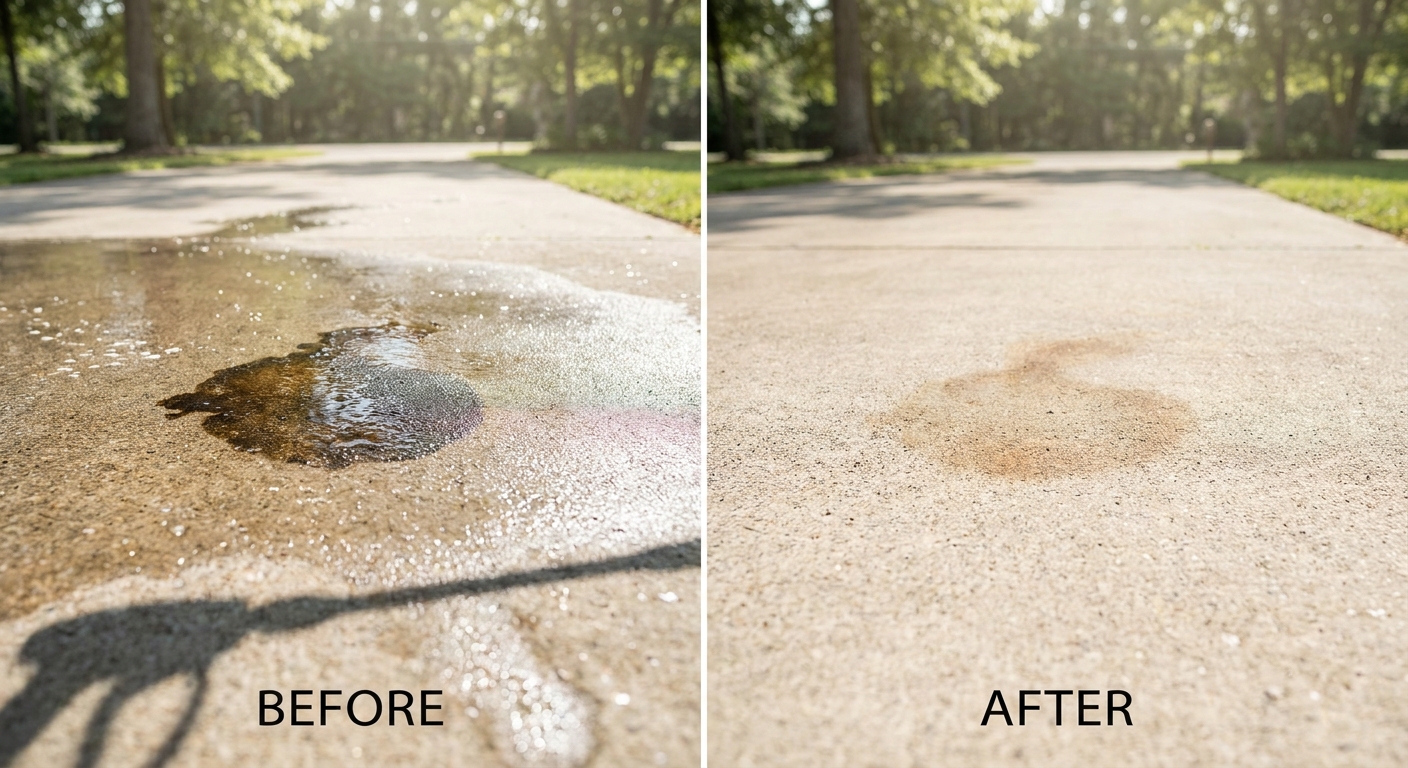
For a stain that is several months to a few years old, professional cleaning with a degreaser and pressure washing typically lightens the stain by 70% to 90% or more. The dark, greasy centre usually disappears, leaving behind a faint gray or tan shadow that is far less noticeable, especially when the driveway is wet.
When Complete Removal Isn’t Possible
In some cases, particularly with very old, thick, or deeply penetrated stains on porous concrete, a faint shadow may remain even after multiple treatments. This is not a failure of technique; it is the physical limit of what can be done without damaging the concrete. We treat every customer’s property as we would our own, which is why we always set honest expectations before starting. If a shadow is likely to remain, we say so plainly and recommend the best path forward for your specific situation.
Maintenance After Cleaning
After the stain has been lightened or removed, the best way to keep your driveway looking clean is to address new oil drips promptly. If a vehicle leaks, repairing it promptly prevents new stains from setting. Periodic professional cleaning with a mild degreaser can also slow the re-accumulation of oil and grime.
Precautions to Avoid Damaging Your Concrete Driveway
Avoiding High Pressure on New Concrete
Concrete that is less than 24 months old is still curing and is more vulnerable to surface damage from pressure washing. We use lower pressure and wider fan nozzles on newer slabs, or we rely more heavily on chemical action and gentle rinsing. High pressure on fresh concrete can erode the surface paste and expose the aggregate.
Proper Nozzle Selection
Nozzle choice is critical. A zero-degree nozzle concentrates all the force into a tiny point and can etch or gouge concrete. We typically use a 15- or 25-degree fan nozzle for oil stain work, which spreads the pressure over a wider area and reduces the risk of damage while still providing enough agitation to rinse away emulsified oil.
Protecting Surrounding Areas
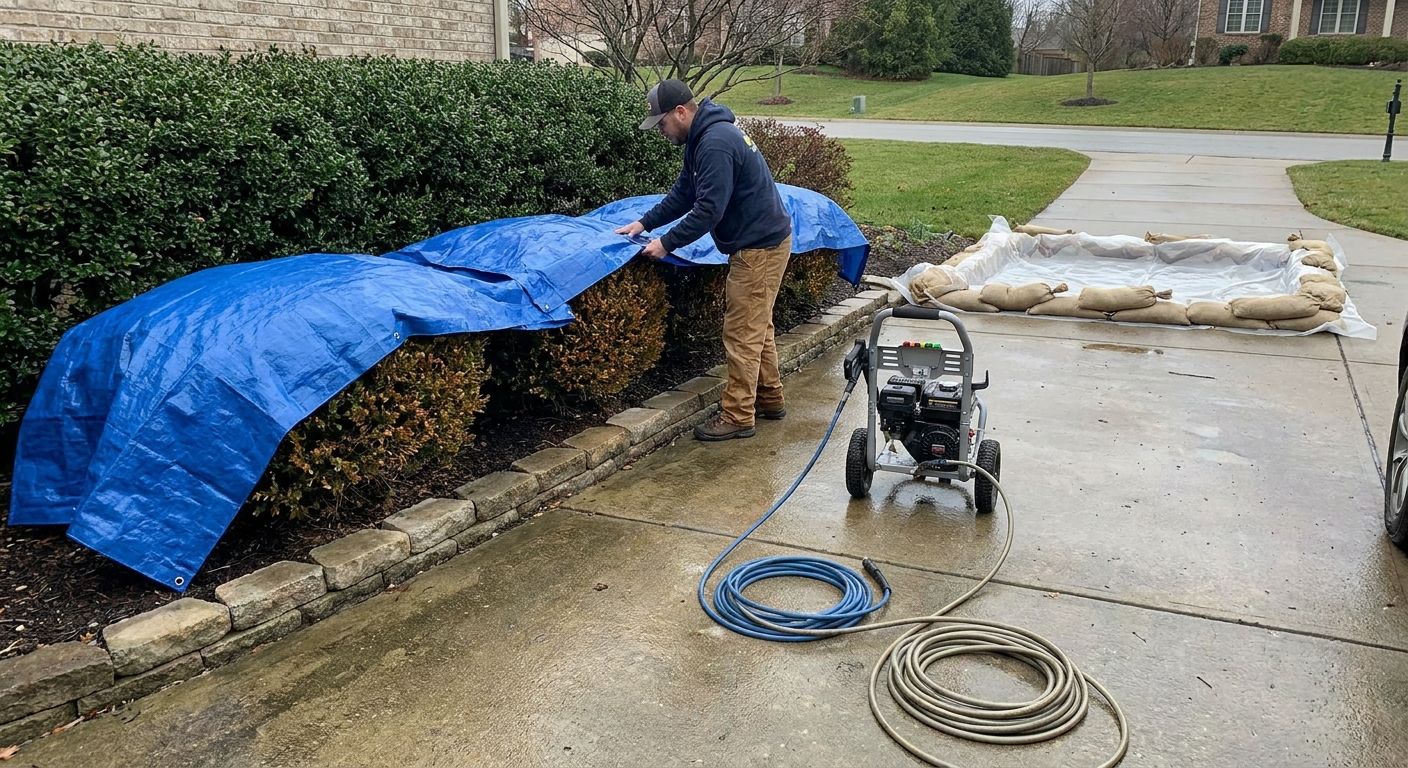
Before starting, we cover nearby landscaping, electrical outlets, and door thresholds to prevent overspray and chemical runoff. We also contain rinse water where possible and direct it away from storm drains, because oil and degreaser residue should not enter the water system. These precautions protect your property and the environment.