
Mineral deposits from hard water bond to exterior glass at a molecular level, making ordinary window cleaners ineffective. Once hard water evaporates, calcium and magnesium ions attach to the silica in the glass and form a crust that becomes harder to remove with each wetting cycle.
Understanding how professionals remove stubborn hard water stains from exterior windows begins with recognizing the difference between surface mineral scale and permanent glass etching. This distinction determines which cleaning solutions, tools, and techniques will safely restore clarity without causing further damage.
Understanding Hard Water Stains on Exterior Windows
What Causes Mineral Deposits on Exterior Glass?
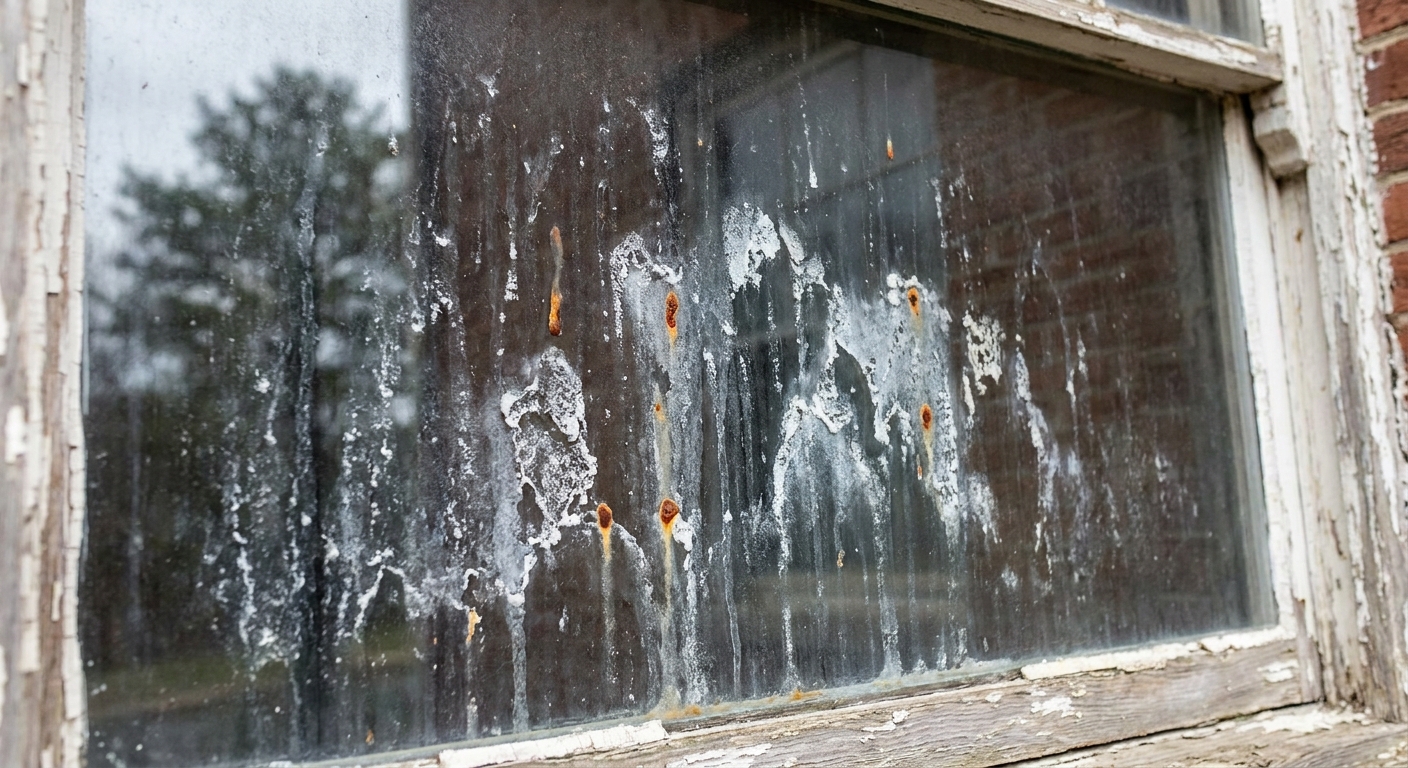
Hard water contains dissolved minerals, primarily calcium and magnesium, with some iron. When sprinkler overspray, rain, or condensation lands on exterior glass and evaporates, these minerals remain behind as a chalky white or rust-colored film. Repeated exposure builds layer upon layer, creating a crust that resists normal glass cleaners.
- Calcium and magnesium form white or gray scale deposits.
- Iron can leave orange or rust-colored staining.
- Sprinkler overspray is a common source because it repeatedly wets the same area with mineral-rich water.
Why Hard Water Stains Are More Than Just Cosmetic
Left untreated, mineral deposits can slowly etch the glass surface. The alkaline minerals react chemically with the silica in glass, creating microscopic pits that scatter light and cause permanent cloudiness. Once etching occurs, no cleaning product can remove it; the glass must be polished or replaced. This is why professional removal focuses on preventing deposits from reaching that stage.
Professional Assessment of Stubborn Stains
Evaluating Stain Severity and Glass Condition
We begin by examining the glass under direct and angled light to assess stain thickness, uniformity, and age. We check for any existing scratches, chips, or coatings that could be damaged by aggressive cleaning. A small test patch helps determine whether the deposit is purely surface scale or if it has begun to bond more firmly.
With 30+ years of combined experience, we have refined our assessment process to catch early signs of glass etching before it worsens. This protects the glass from unnecessary abrasion and ensures we choose the most effective removal method for each window.
Identifying Potential Glass Etching
Etching appears as a cloudy haze that remains after the mineral crust is removed. Running a fingernail over the surface can reveal a rough texture, though professionals use magnification and light reflection to distinguish etching from residual scale. Early detection is critical because the longer deposits sit, the deeper the etching becomes.
Professional-Grade Cleaning Solutions for Exterior Windows
Acidic Cleaners: Effective and Safe Application
Professional acidic cleaners are formulated to dissolve the mineral bonds between calcium, magnesium, and the glass surface. We apply these solutions with controlled dwell time, usually 5 to 15 minutes, and always test on a small area first. Acidic cleaners must never be used on tinted or coated glass without verifying compatibility, as they can strip protective films.
Chelating Agents for Mineral Dissolution
Chelating agents work differently: they bind to mineral ions and lift them away without relying on acidity. This makes them safer for sensitive glass types and surrounding materials. We often choose chelating formulas when dealing with windows near painted frames, sealants, or landscaping that could be damaged by acidic runoff.
Eco-Friendly Alternatives for Sensitive Areas
For properties near water features, gardens, or areas with strict environmental regulations, we use biodegradable chelating agents or mild citric-acid-based cleaners. These solutions break down mineral deposits effectively while minimizing harm to plants and soil when properly rinsed and contained.
Specialized Tools and Equipment for Professional Window Cleaning
Water-Fed Poles and Pure Water Systems
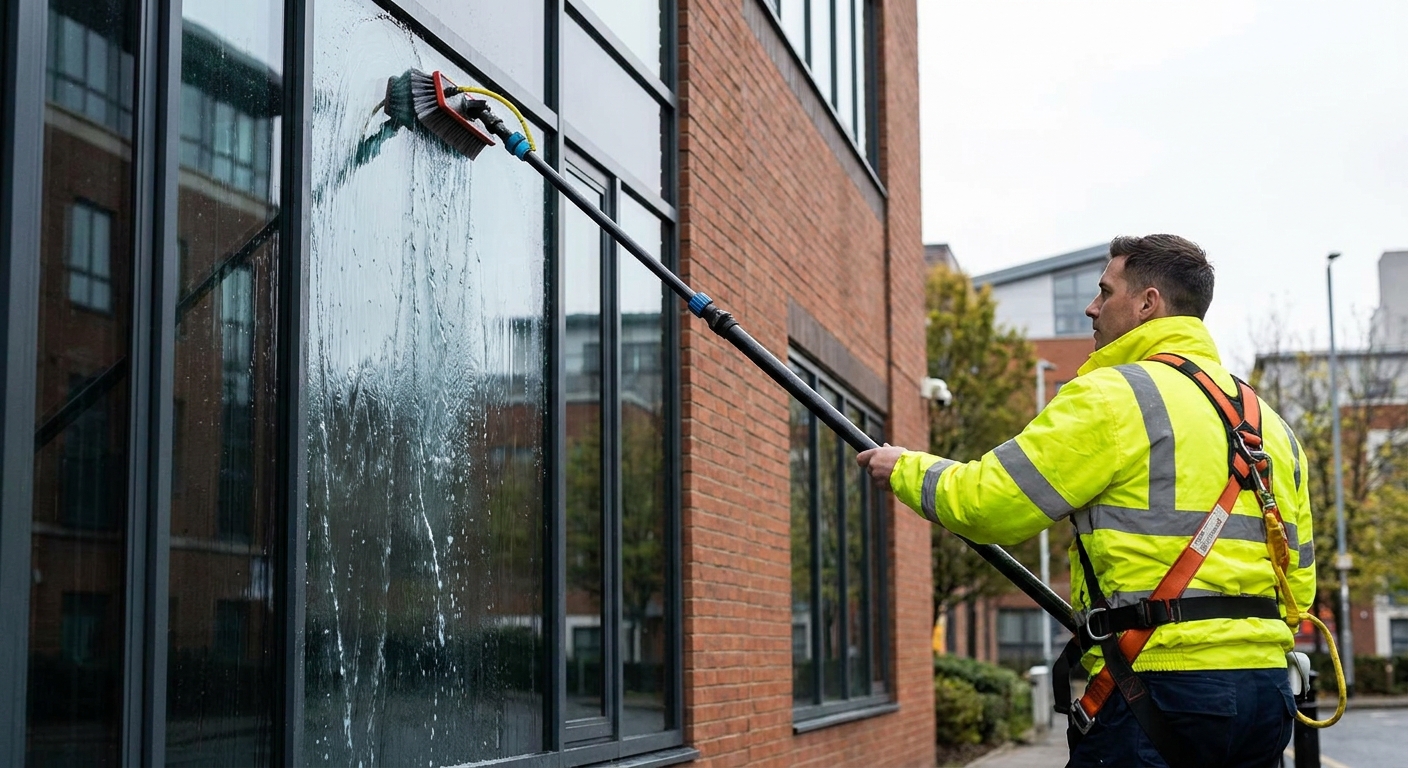
Pure water systems remove dissolved minerals from rinse water, allowing the glass to dry without leaving spots. Combined with water-fed poles, these systems let us clean upper-story windows from the ground, reducing ladder risk and improving reach. The brush head agitates the cleaning solution while pure water rinses away residues.
Scrapers and Abrasive Tools for Tough Deposits
After chemical treatment softens the mineral scale, we use razor scrapers at a low angle on wet glass to remove the thickest crust. Non-abrasive scrub pads or fine steel wool (on uncoated glass only) can be used for remaining spots. We never scrape dry glass, as this can scratch the surface.
Step-by-Step Professional Process for Removing Stubborn Stains
Preparing the Work Area and Protecting Surroundings
We cover nearby plants, furniture, and surfaces with drop cloths to prevent chemical contact. We close all windows and doors to keep solutions from entering the interior. Runoff is directed away from sensitive areas, and any pooled solution is neutralized and rinsed thoroughly.
Applying Cleaning Solutions with Dwell Time
We apply the chosen acidic or chelating solution generously, ensuring full coverage over the stained glass. The solution needs 5 to 15 minutes to penetrate and dissolve mineral bonds. On hot or windy days, we reapply or use a cling gel to prevent the solution from drying before it works.
Agitation Techniques for Stubborn Stains
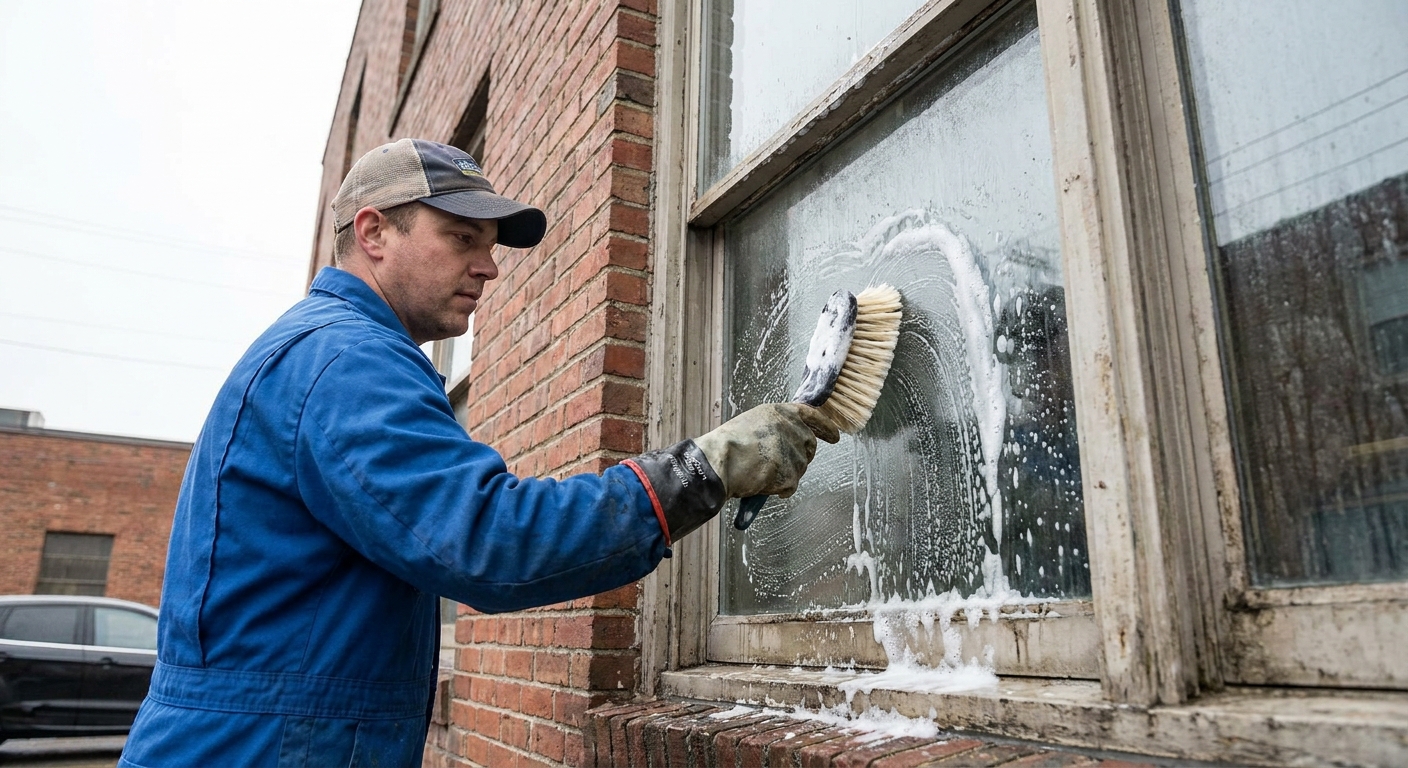
Once the solution has had time to work, we agitate the surface with soft-bristle brushes, non-scratch scrub pads, or a low-speed rotary buffer with a felt pad. Circular motions lift the loosened scale without scratching. We rinse the agitation tool frequently to avoid redepositing minerals.
Thorough Rinsing and Drying for Streak-Free Results
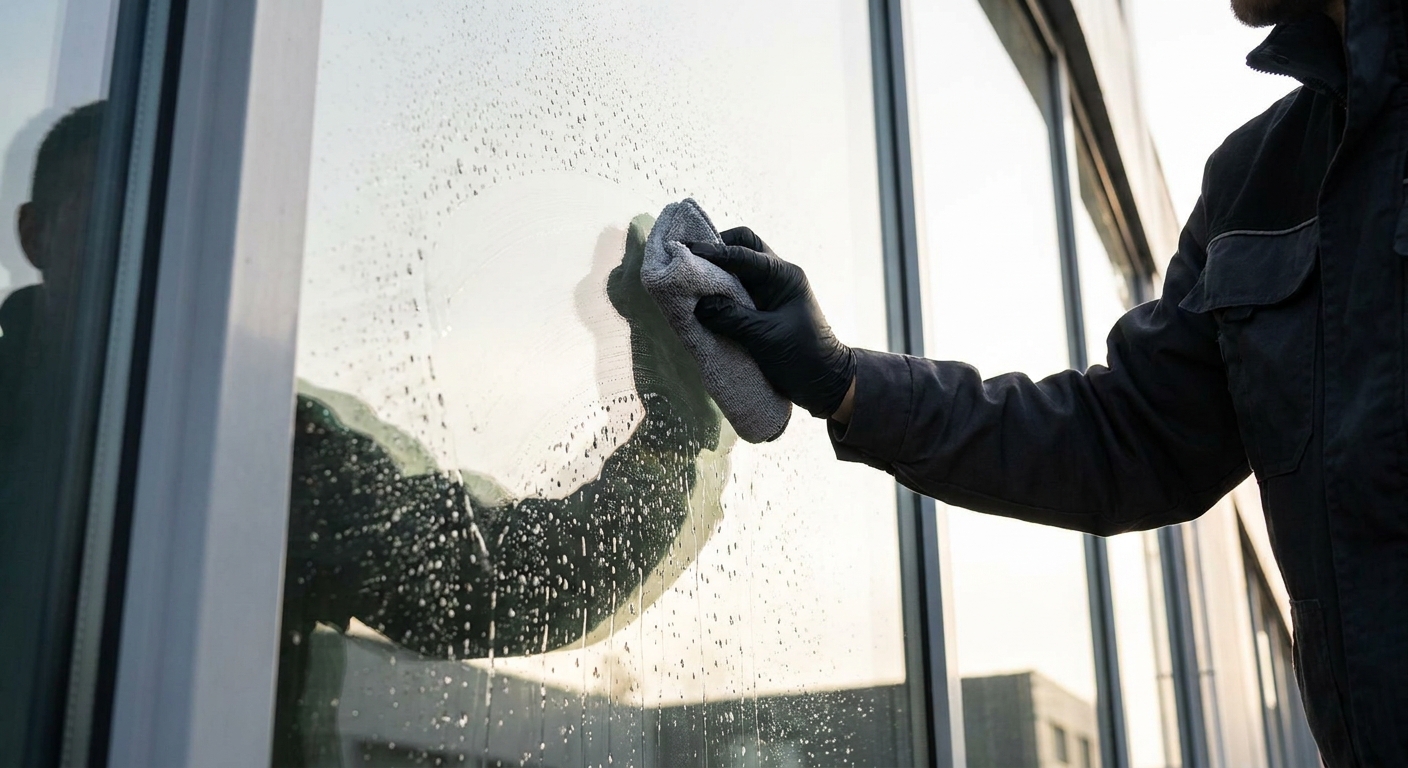
We rinse the glass with pure or filtered water to remove all dissolved minerals and cleaning residues. A squeegee is drawn from top to bottom in overlapping strokes, and edges are dried with lint-free microfiber cloths. This final step prevents new mineral deposits from forming as the glass dries.
Advanced Techniques for Etched or Severely Stained Glass
When Mineral Deposits Have Etched the Glass
If the glass remains cloudy after all mineral scale is removed, etching has occurred. This is permanent micro-pitting that cannot be cleaned away. Professional restoration can reduce the haze, but the glass may never return to perfect clarity. In severe cases, replacement is the only way to fully restore transparency.
Professional Polishing and Restoration Methods
For mild etching, we use cerium oxide or specialized glass polishing compounds with a low-speed rotary polisher. The process requires careful pressure and cooling to avoid creating distortion or heat cracks. Multiple passes may be needed, and we always test in an inconspicuous corner first. This technique can significantly improve clarity, though it is not a guaranteed fix for deep etching.
Preventing Hard Water Stains on Exterior Windows
Applying Protective Coatings to Exterior Glass
After removing the stains, we apply a hydrophobic coating to the exterior glass. This coating causes water to bead and roll off, reducing the amount of mineral residue left behind. It also makes future cleaning easier and extends the time between professional maintenance visits.
Establishing a Maintenance Schedule
Regular professional cleaning every 6 to 12 months prevents mineral deposits from building to a stubborn, etching stage. The exact frequency depends on water hardness, sprinkler exposure, and local weather patterns. We recommend inspecting exterior windows each season for early signs of scale.
Safety Protocols for Professional Exterior Window Cleaning
Working at Heights: Ladder and Lift Safety
We use stabilized ladders, fall protection harnesses, and lift equipment for windows above safe ladder reach. The ground area is kept clear of tools and hoses, and we verify that all equipment is rated for the load. Safety is never compromised for speed.
Chemical Handling and Personal Protective Equipment
Our technicians wear chemical-resistant gloves, safety goggles, and appropriate respirators when handling acidic or chelating cleaners. We follow material safety data sheets for every product, store chemicals in labeled containers, and neutralize any spills immediately. This protects both our team and your property.
Conclusion: The Value of Professional Window Care
Stubborn hard water stains require more than elbow grease. Professional assessment, the right cleaning chemistry, and controlled tools remove mineral deposits safely while protecting glass from etching. Regular maintenance and protective coatings keep exterior windows clear and reduce long-term damage. If hard water stains are clouding your exterior windows, contact us for a professional assessment and restoration.