
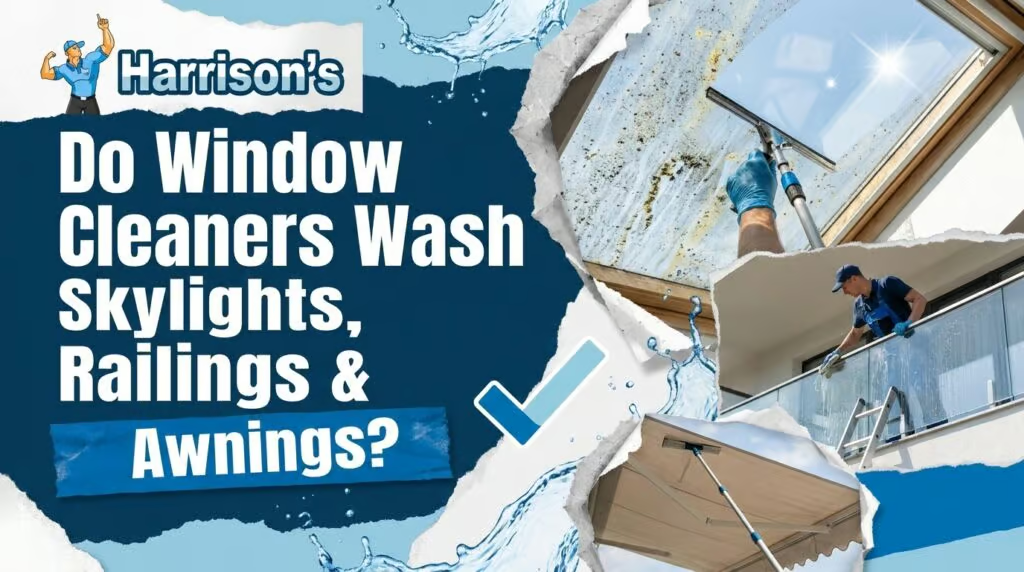
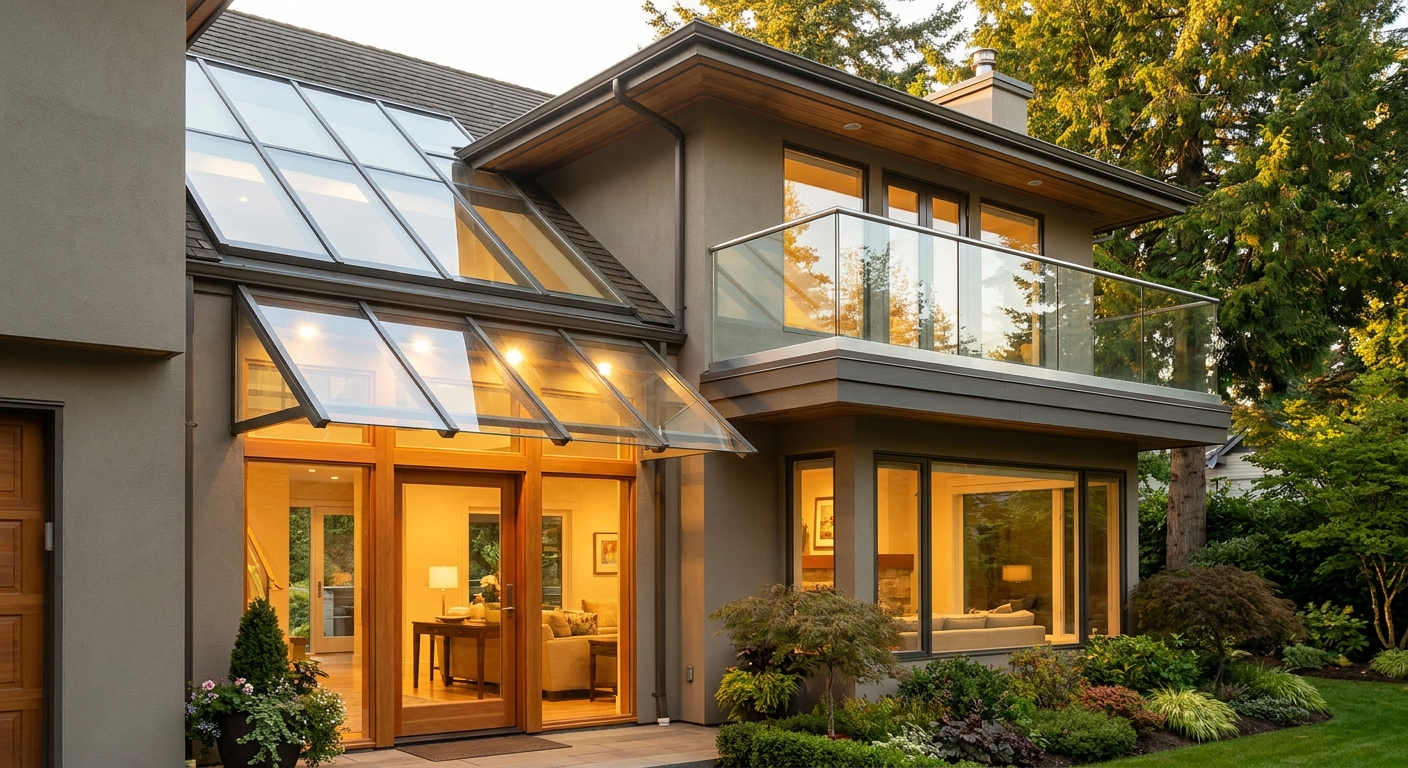
Skylights, glass railings, and awnings trap dirt, pollen, and mineral film differently from vertical windows, and they are among the most common surfaces homeowners forget to include on a cleaning schedule. Do professional window cleaners also wash skylights, glass railings, and awnings? Yes—these are standard parts of a full exterior glass service, not add-ons that require a separate specialty company.
In the sections below we explain how pros identify the material, choose the right tool, and work safely at height so every panel comes out streak-free without scratching or forcing water past seals.
Professional Skylight Cleaning Services
Professional window cleaning includes skylights as routine work, but the method changes based on whether the skylight is flat glass, domed acrylic, or polycarbonate. We inspect the edge seal, flashing, and interior condensation before wetting anything, because some haze cannot be cleaned away—it signals a failed seal that needs replacement.
Types of Skylights Cleaned by Professionals
We regularly service flat glass skylights, domed and tubular skylights, and polycarbonate roof panels. Flat glass is common on modern homes; domes appear on older additions and sunrooms; tubular skylights bring light into hallways and closets. Each type has a different glazing and frame profile.
- Flat glass skylights: clean with gentle non-abrasive detergent and a soft brush, then squeegee dry.
- Dome and tubular skylights: usually acrylic or polycarbonate, cleaned with water and mild dish soap only.
- Polycarbonate roof panels: require the softest touch because they scratch more easily than glass.
Methods for Cleaning Skylights
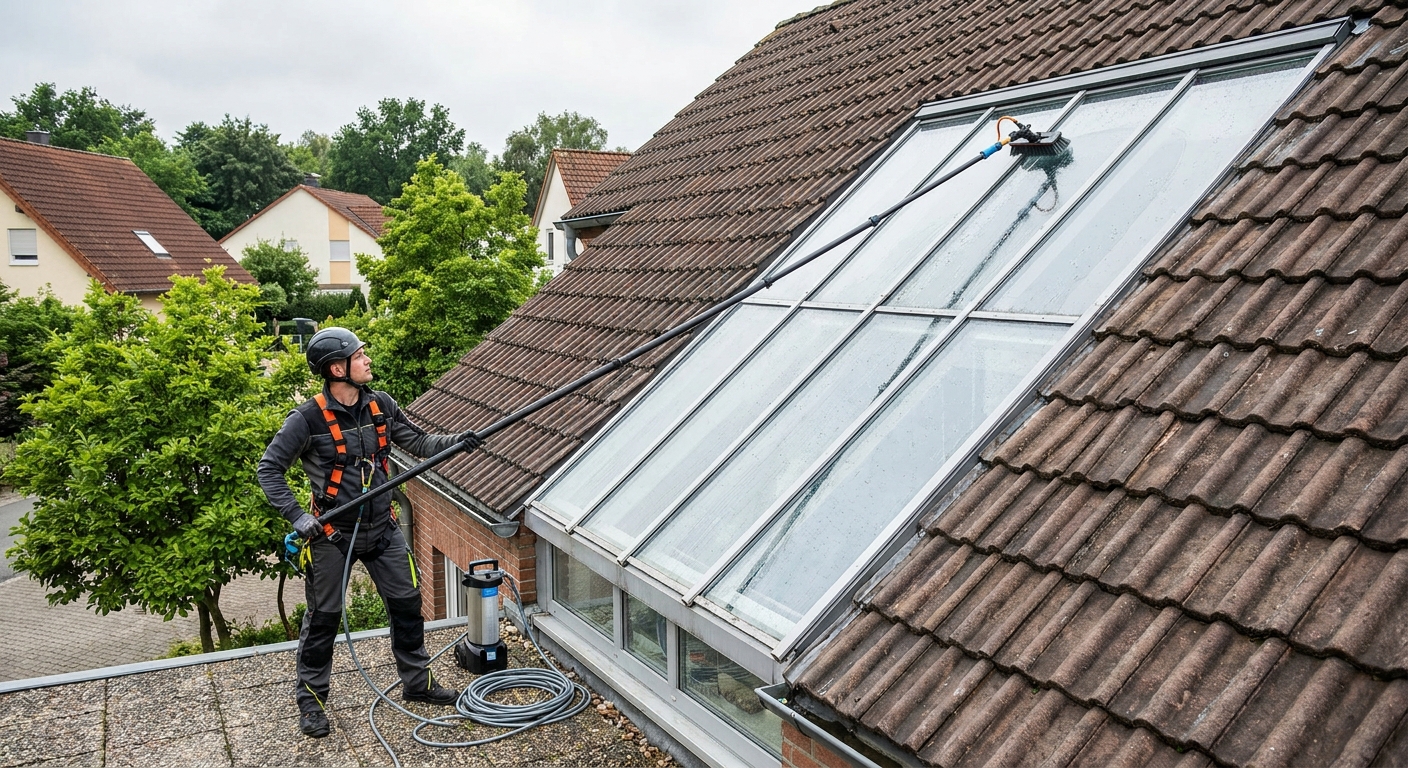
Most skylights can be cleaned from the ground or a stable platform using water-fed poles with a soft brush head, which avoids foot traffic on the roof. For interiors, we use extension poles and squeegees to reach overhead glass without placing a ladder directly under the opening.
We never pressure-wash a skylight, because force at the perimeter can dislodge gaskets and push water past the seal. Instead, we soak the surface, agitate with a soft brush, and rinse with purified water so it dries spot-free.
Glass Railing Cleaning by Professionals
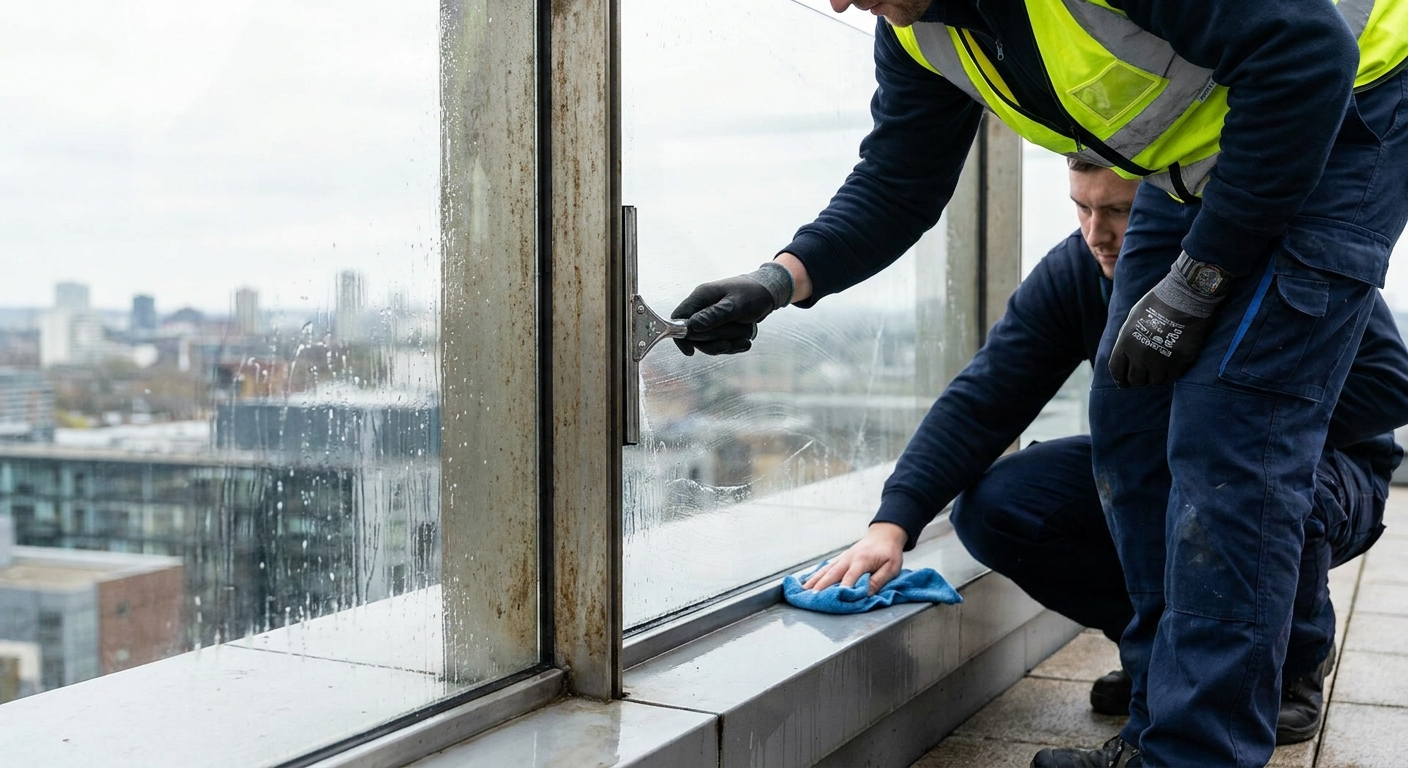
Glass railings around decks, balconies, and staircases collect hand oils, water spots, and airborne dust on both sides, and they are visible from inside and outside the home. Including them in a window cleaning service keeps sightlines clear and prevents etching from mineral buildup.
Why Include Glass Railings in Window Cleaning?
Railings are glass surfaces just like windows, but they sit at different heights and often have exposed edges and metal channels. Professional cleaners include them because the same purified water and squeegee methods work, but the work requires more bending, reaching, and edge detailing than a typical pane.
We treat the gap between glass and metal posts as a key detail, because trapped moisture there leads to permanent white scale and corrosion that degrades the railing over time.
Techniques for Streak-Free Glass Railings
For glass railings we hand-clean tight corners and around hardware with microfiber cloths, then use a squeegee or water-fed pole for large flat areas. A separate dry microfiber wipe on edges removes drips that collect at the bottom channel.
- Start with a rinse to float off grit and avoid scratching.
- Apply mild detergent with a lint-free scrubber, working top to bottom.
- Squeegee in straight overlapping strokes, drying the blade after each pass.
- Detail the bottom channel and hardware with a dry cloth.
Awning and Awning Glass Cleaning
Awnings come in two broad categories—fabric and glass—and professional window cleaning teams wash both, but the approaches are entirely different. Fabric awnings need low-pressure rinsing and soft brushing to avoid tearing the weave, while glass awning panels are cleaned like angled skylights with a water-fed pole.
Fabric Awnings vs. Glass Awnings
Fabric awnings shade patios and storefronts, and they hold mildew and pollen in the weave. Glass awnings are structural panes over entryways and walkways; they show water spots and streaks in direct sunlight. We identify the material before choosing any cleaning agent.
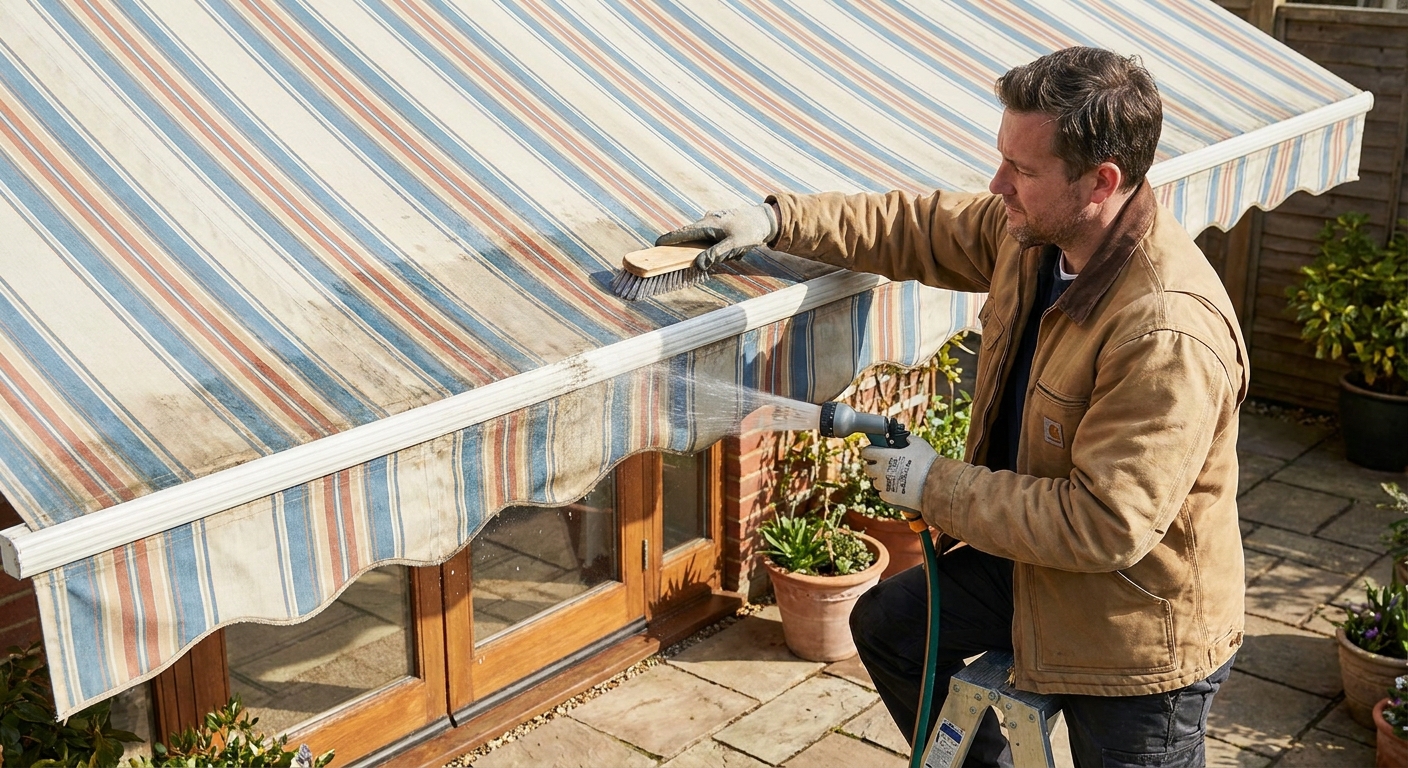
For fabric, we use a soft brush, mild soap, and a low-pressure rinse, working from the bottom upward to prevent streaking. For glass awnings, we use the same non-abrasive approach as skylights, but pay extra attention to the underside where condensation and dirt accumulate.
Professional Cleaning Approaches for Awnings
Fabric awning cleaning is more about thorough rinsing than aggressive scrubbing, because leftover soap attracts more dirt. We allow the fabric to dry completely before retracting. Glass awnings get a purified water rinse so they dry clear without ladder marks.
Specialized Equipment for Hard-to-Reach Glass
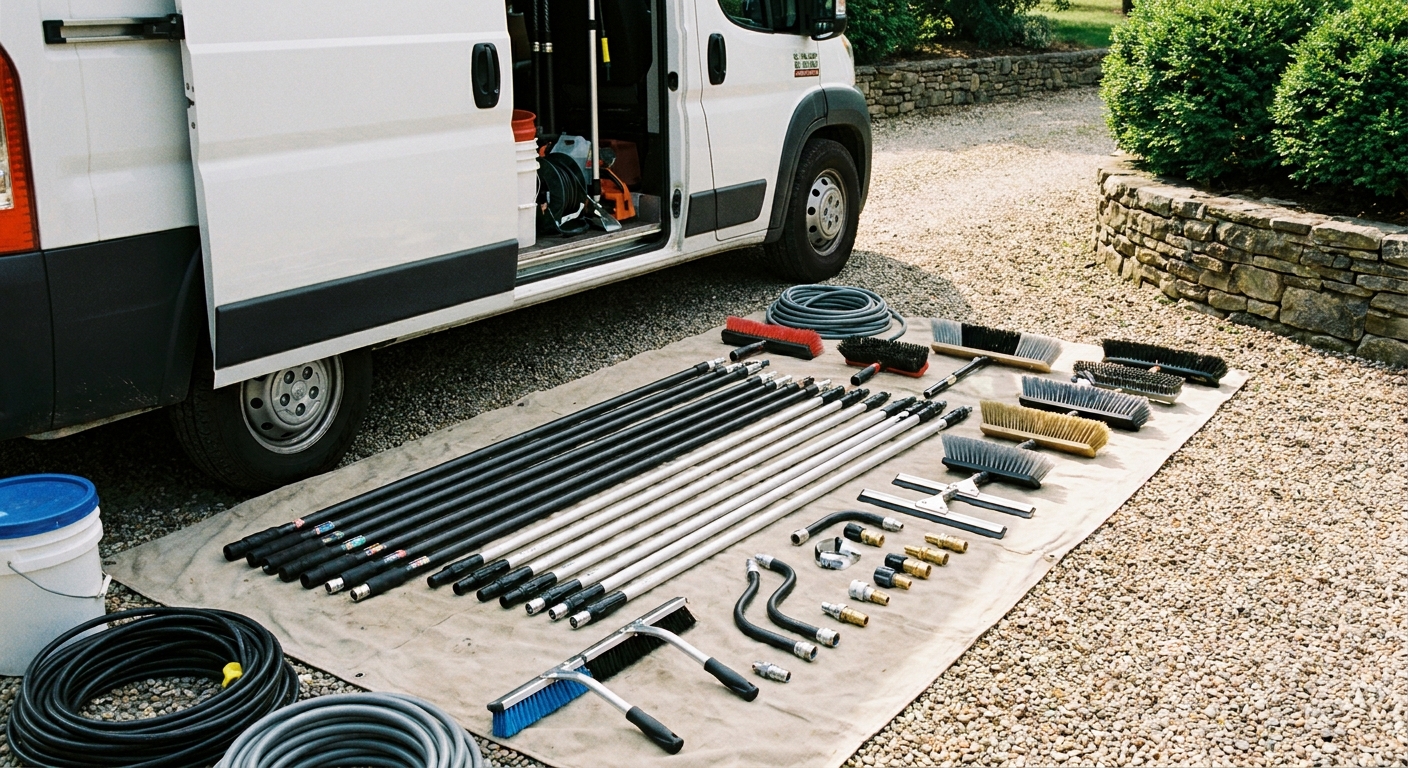
The reason professional window cleaners can safely wash skylights, railings, and awnings is the equipment designed for reach and consistent pressure, not balancing acts on ladders. We rely on two main systems.
Water-Fed Pole Systems
A water-fed pole combines an extendable carbon-fiber pole with a soft brush head and a hose that delivers purified water. The water is deionized, so it dries without mineral spots, and the pole lets us clean up to four storeys from the ground. This is our first choice for skylights, glass awnings, and tall exterior panes.
Telescopic Poles and Extension Tools
When a surface has stubborn grime or is accessible from a balcony, we use telescopic poles with angle adapters so the squeegee or scrubber sits flush against the angled glass. This maintains even contact and reduces streaking on sloped surfaces.
Material-Specific Cleaning Approaches
The biggest mistake in cleaning overhead glass is treating every surface like a vertical window. Glass, acrylic, and polycarbonate each react differently to chemicals and pressure, and one wrong product can permanently cloud a dome or strip a low-e coating.
Cleaning Glass vs. Acrylic vs. Polycarbonate
Glass tolerates a mild non-abrasive glass cleaner or detergent, but acrylic and polycarbonate do not. Solvents and ammonia-based sprays cause crazing that cannot be polished out. For plastic domes and panels, we use only water and liquid dish soap with a soft cloth or sponge, per manufacturer guidance.
- Glass: non-abrasive detergent, squeegee, no metal scrapers.
- Acrylic: water and mild dish soap only; avoid ammonia, alcohol, and solvents.
- Polycarbonate: same gentle approach, with extra care around corners and edges.
Avoiding Scratches and Damage
We never use pressure washers near seals, and we never stand or crawl on glazing. Before scrubbing, we float off surface grit with a rinse, then use a clean, dedicated brush that has not been used on abrasive surfaces. Every tool head is inspected before it touches the glass.
Safety Protocols in Professional Cleaning
Working at height around skylights and awnings requires fall protection and a plan for every access point. We treat a skylight as an opening in the roof, never as a walking surface, and we set up safeguards before any work begins.
Working at Heights Safely
Whenever a crew member leaves the ground, they use a harness with a secure anchor point or work from a stable platform with guardrails. For ground-based water-fed pole work, no climbing is needed at all. We check the roof pitch and surrounding surface before choosing the method.
We maintain a 100% safety record on every job, which is why we use harnesses, secure anchor points, and spotter checks before any high work.
Insurance and Liability Considerations
Professional window cleaning companies carry liability insurance and follow workplace safety rules for fall protection. Before any high glass cleaning, we verify that the property’s access points, including decks and roof edges, can support the equipment and crew safely. Documentation is available on request.
Benefits of Regular Professional Cleaning
Consistent cleaning of skylights, glass railings, and awnings does more than improve appearances. It protects the materials and keeps interiors brighter throughout the year.
Improved Natural Light and Visibility
A film of dust, pollen, and mineral deposits can reduce light transmission by a noticeable margin, making rooms feel darker and views hazy. After cleaning, skylights and railings let through the full spectrum of daylight, which reduces the need for artificial lighting during the day.
Extended Lifespan of Surfaces
Grime is not just cosmetic—it etches glass over time and feeds mildew on fabric awnings. Removing buildup regularly prevents permanent staining, seal degradation, and corrosion on metal frames, adding years to the surface.
Enhanced Aesthetics and Property Value
Clean glass on railings and awnings is one of the first things visitors notice about a property. It signals that the home or building is well maintained, which supports curb appeal and long-term value without major renovation.
If you are ready to schedule a full glass cleaning that includes skylights, railings, and awnings, contact our team and we will prepare a service plan around your property.